

Introduction
Music education in Gilbert, Arizona is evolving as more families seek learning methods that are both effective and engaging for today’s students. While traditional practice and theory still play an important role, many high-quality programs are now blending these foundations with music lesson games and interactive learning systems. This approach makes lessons more interactive, helping students feel less overwhelmed and more excited to learn instruments, rhythm, and music theory in a way that fits modern learning styles.
In this blog, you’ll discover how game-based music learning works and why it is becoming so popular among parents and students in the East Valley. We’ll break down how engagement improves learning outcomes, what tools are used in these programs, and how students’ progress through structured, game-like systems. Whether you’re looking for piano, guitar, or violin, understanding this modern approach will help you decide if it’s the right fit for your child’s musical journey.
Why Gilbert, Arizona Is Embracing Modern Music Learning Methods
Gilbert, Arizona has become a growing hub for families who value education, creativity, and technology-driven learning. As a result, music programs in the area are evolving quickly to meet these expectations. Using music lesson games fits perfectly into this environment because it blends innovation with structured education.
A tech-forward learning environment
Gilbert is home to a community that is highly comfortable with digital tools and technology. This makes it easier for music schools to introduce apps and interactive platforms into lessons. Students already familiar with technology adapt quickly to gamified learning systems.
Demand from parents and students
Parents want learning methods that keep children motivated without constant pressure and encourage your child’s love for music in a fun, supportive way. Students generally prefer interactive experiences over repetitive drills that can feel discouraging. This shared preference is pushing local schools toward more engaging teaching styles.
Strong focus on youth development
The community places a strong emphasis on youth enrichment programs, including arts and music. Music lessons in schools matter because they help students develop creativity, discipline, and confidence from an early age. Schools and private instructors are encouraged to develop creative learning environments. Game-based learning supports both artistic growth and structured skill development.
Benefits of Using Music Lesson Games
Game-based music learning offers a fresh approach that improves both motivation and skill retention. Instead of focusing only on traditional repetition, it creates a dynamic learning environment where students actively participate in their progress. This makes it especially effective for younger learners in Gilbert, Arizona.
Improved student motivation
Students are more driven when lessons feel like an achievement rather than a chore. Earning points, unlocking levels, and completing challenges keeps them engaged and leads to more consistent practice habits.
Better learning retention
Interactive learning helps students remember musical concepts more effectively and shows how kids learn through music in a more natural, engaging way. Instead of memorizing theory passively, they apply it in real-time activities. This strengthens long-term understanding and skill development.
Positive home practice habits
Parents often notice that children are more willing to practice without reminders. The game-like structure removes frustration and adds excitement to practice sessions. This creates a healthier and more consistent routine at home.
How Game-Based Music Lessons Work
Game-based music lessons are designed around structured progression, where students move through levels based on skill mastery. Each lesson blends traditional instruction with interactive digital tools to reinforce learning. This combination makes practice more engaging and measurable.
Step-by-step learning structure
Students begin with foundational concepts like rhythm and note recognition, which help introduce kids to music in a simple and approachable way. As they improve, they advance to more challenging tasks that build on previous skills. This structured progression helps avoid overwhelming students during the learning process.
Role of digital tools and apps
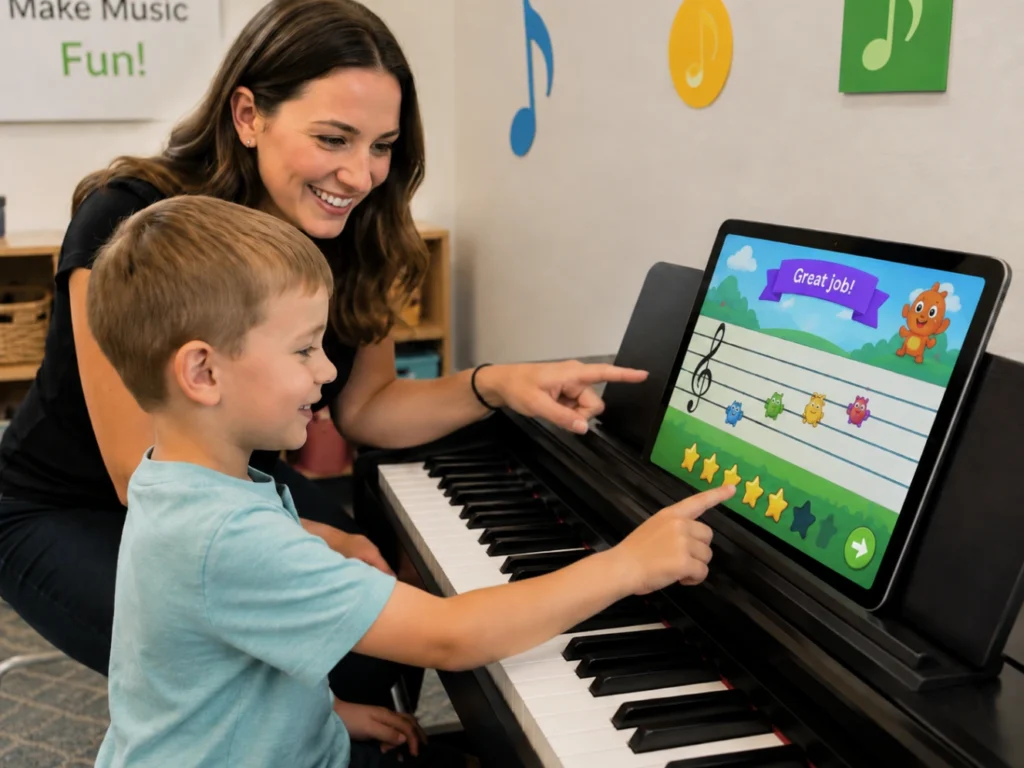
Apps provide real-time feedback on accuracy, timing, and pitch. This allows students to correct mistakes instantly instead of repeating errors. It also keeps the learning process interactive and responsive.
Rewards, points, and progression systems
Students earn points and rewards for completing tasks successfully. These incentives help maintain interest and encourage consistent improvement. Music Lessons with Game-Based Learning in Gilbert Arizona uses this system to keep students engaged.
Tools and Platforms Used in Modern Music Learning
Modern music education relies heavily on technology to support interactive learning. These tools help students understand complex musical concepts in a simple and engaging way. They also allow teachers to personalize lessons more effectively.
Interactive music apps
Music apps guide students through lessons using visuals and step-by-step exercises. They are especially helpful for beginners who need structured guidance. These apps make learning more accessible and enjoyable.
Rhythm and timing games
Rhythm games help students develop a strong sense of timing and coordination. They challenge students to match beats and patterns accurately. This improves overall musical precision.
Hybrid classroom technology
Many instructors in Gilbert combine in-person teaching with digital tools, creating a balanced learning environment that supports different learning styles. This approach also reinforces how music learning boosts math and science skills by encouraging pattern recognition, memory, and critical thinking. It also helps students practice more effectively at home.
Real-Life Example of a Game-Based Music Lesson
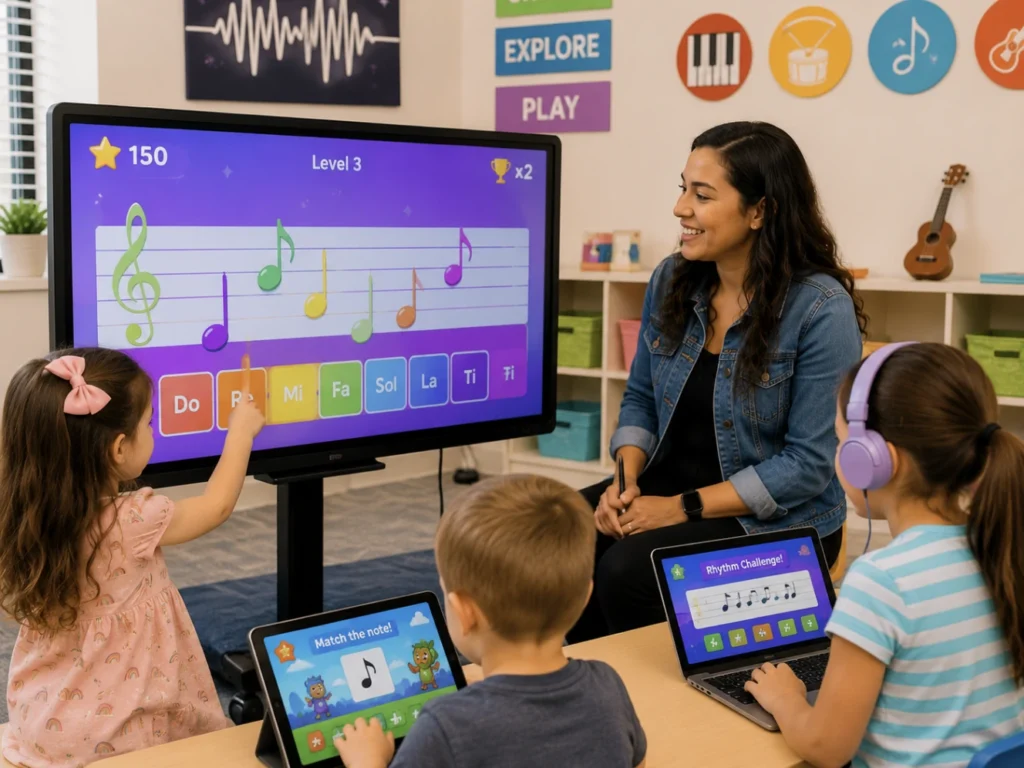
A game-based music lesson typically blends fun challenges with structured learning goals. Students’ progress step-by-step while building real musical skills. This approach helps make abstract concepts easier to understand.
Beginners note recognition game
Students start by identifying musical notes through interactive exercises, making music lessons for all ages more engaging and approachable for beginners. Each correct answer earns immediate feedback and rewards. This builds early confidence in reading music. It also helps students quickly connect visual notes with their corresponding sounds in a fun, low-pressure way.
Rhythm challenge progression
Next, students move into rhythm exercises that increase in difficulty over time. They must match beats and patterns accurately to advance. This strengthens timing and coordination skills. It also trains students to stay consistent with the tempo, which is essential for all instruments.
Performance unlock system
Once students complete certain tasks, they unlock short musical pieces or new challenges. This creates excitement and a sense of accomplishment. It keeps students motivated to continue learning. It also encourages goal setting by giving students something exciting to work toward next.
Where to Find Interactive Music Lessons in Gilbert, AZ
Finding a program that balances fun with high-quality instruction is key to a student’s long-term success. Local music schools that specialize in modern pedagogy can transform the way a student views practice.
At Gilbert School of Music, we specialize in making music education engaging through a combination of experienced instruction and music lesson games. We focus on building a strong musical foundation while keeping students excited about their instruments.
Challenges of Game-Based Learning in Music
While game-based learning is highly effective, it does come with challenges that must be managed carefully. Without balance, students may rely too heavily on digital tools instead of real practice. Proper structure is essential for success.
Overuse of digital tools
Too much screen-based learning can reduce the time spent practicing real instruments. This can slow down physical skill development if not managed properly. Teachers must balance digital and hands-on learning.
Screen time concerns
Parents sometimes worry about excessive screen time during lessons. This is especially important for younger children. Limiting device use helps maintain a healthy learning balance. It also encourages more hands-on practice and real-world musical interaction outside of the screen.
Different learning speeds
Not all students progress at the same rate in gamified systems. Some may need extra support outside of the game structure. Personalized instruction helps address these differences. This ensures each student can build confidence at their own pace without feeling rushed or left behind.
How Teachers Balance Fun and Skill Development
Teachers play a crucial role in ensuring that game-based learning remains effective. They combine traditional methods with interactive tools to create a balanced curriculum. This ensures students build both enjoyment and real musical ability.
Combining traditional and digital methods
Teachers use a mix of sheet music, instrument practice, and digital games. This helps students understand both theory and application. It creates a well-rounded learning experience. It also ensures students don’t become overly dependent on digital tools alone.
Personalized learning plans
Each student receives a plan tailored to their skill level and learning speed. Teachers adjust difficulty based on progress. This keeps students challenged but not overwhelmed. It also allows instructors to focus on each student’s unique strengths and weaknesses.
Progress evaluation beyond games
Teachers assess actual instrument performance, not just game scores. This ensures that students develop real-world musical skills. It keeps learning grounded in practical ability. It also gives parents a clearer picture of true musical growth beyond digital achievements.
Why Parents Choose This Approach in Gilbert Arizona
Parents are increasingly drawn to game-based music learning because it aligns with modern learning habits. It helps children stay motivated while still developing strong foundational skills. This makes it a practical choice for busy families.
Higher student engagement
Students are more excited to attend lessons when learning feels like a game. This reduces resistance and improves consistency. Parents see fewer struggles with practice time. It also creates a more positive emotional connection between students and their instrument.
Clear progress tracking
Many programs provide detailed progress reports for parents. This helps them understand their child’s development clearly. It builds trust in the learning process. It also makes it easier for parents to support practice routines at home.
Long-term interest in music
Students are more likely to continue music when they enjoy learning. This helps build lifelong skills and appreciation for music. It reduces dropout rates significantly. It also encourages students to explore more advanced musical styles over time.
Future of Music Education in Gilbert Arizona
Music education is moving toward more personalized and technology-driven experiences. Game-based learning will continue to evolve with new tools and methods. This will make learning even more engaging and effective. It will also allow students to progress at their own pace more naturally than traditional methods alone.
Integration of AI learning tools
Artificial intelligence will help customize lessons for each student. It can identify weaknesses and adjust exercises automatically. This improves learning efficiency. It also provides teachers with deeper insights into student performance patterns.
Hybrid learning models
More schools will combine in-person lessons with digital platforms. This gives students flexibility and better practice options. It also enhances teacher support. It additionally helps students stay consistent even outside scheduled lesson times.
Expansion of gamified systems
Gamification will become a standard part of music education. More studios in Gilbert, Arizona will adopt these systems. This will make learning more accessible and enjoyable. It will also push music education toward a more interactive and student-centered future.
Wrapping Up
Music Lessons with Game-Based Learning in Gilbert, Arizona are reshaping how students learn music by blending traditional instruction with interactive, game-like systems. Instead of relying only on repetition and theory-heavy practice, students’ progress through levels, earn rewards, and complete challenges that make learning instruments, rhythm, and music theory more engaging. This approach improves motivation, strengthens retention, and supports more consistent practice habits for beginners and advancing students. Parents also benefit from clearer progress tracking and higher engagement, while teachers can better personalize lessons using digital tools.
If you’re in Gilbert and looking for a more engaging way for your child or student to learn music, game-based learning programs are worth exploring. These lessons turn practice into something more structured, interactive, and goal-driven while still building strong musical foundations. Whether your child is just starting or already learning an instrument, now is a great time to explore Music Lessons with Game-Based Learning in Gilbert, Arizona and find a program that fits their learning style and goals. Start your child’s musical journey today and discover how fun, interactive lessons can build confidence, creativity, and a lifelong love for music.
FAQs
What is game-based music learning?
Game-based music learning uses interactive tools and challenges to teach musical skills. It turns practice into a structured and engaging experience. This helps students learn faster and stay motivated.
Is it effective for beginners?
Yes, beginners benefit greatly because it simplifies complex concepts. It builds confidence through small, achievable steps. This helps students avoid frustration early on.
Do students still learn real instruments?
Yes, real instrument practice is still a core part of lessons. Games are used to support and reinforce learning. They do not replace hands-on practice.
What age group is best suited?
Children between 5 and 16 benefit the most from this approach. However, older beginners can also adapt well. The system is flexible for different ages.
Are these programs available in Gilbert, Arizona?
Yes, many schools and private instructors now offer game-based music learning. Availability is increasing as demand grows. Families have more options than ever before.