

Introduction
Toddlers are in one of the most exciting stages of life—everything feels new, engaging, and full of wonder. In Gilbert, Arizona, more parents are leaning into early enrichment opportunities like music lessons to support their child’s growth in a natural and enjoyable way. At this age, children are wired to explore sounds, rhythms, and movement, making music a perfect match for their developmental needs.
Early music lessons aren’t about creating professional musicians—they’re about nurturing creativity, boosting confidence, and supporting essential developmental milestones. In this guide, we’ll walk through how early music lessons in Arizona for toddler’s work, what parents in Gilbert can expect, and why these programs are becoming a go-to choice for families who want a well-rounded start for their children.
Why Early Music Lessons Matter for Toddlers in Gilbert, Arizona
Early childhood is a critical window for learning, and music plays a surprisingly powerful role during this stage. In Gilbert, Arizona, toddler music programs are designed to support this growth through engaging, sensory-rich experiences that align with how young children naturally learn.
The Science Behind Early Music Exposure
Music stimulates multiple areas of the brain at once, helping toddlers develop connections that support language, coordination, and memory. When children engage in activities like clapping or singing, they are strengthening neural pathways that contribute to long-term learning success. These early interactions with music also help improve listening skills, which are essential for communication development. Over time, repeated exposure to rhythm and melody helps toddlers process information more efficiently and encourage your child’s love for music from an early age.
Why Gilbert Parents Are Choosing Music Programs
Parents in Gilbert are becoming more intentional about early childhood education and finding new ways to introduce kids to music at an early age. Many families are looking beyond traditional learning methods and embracing creative programs like music classes. These lessons provide a balanced mix of fun and structure, allowing toddlers to learn while enjoying themselves. Additionally, the community’s focus on family-friendly activities makes it easier to find programs that fit different schedules and needs.
How Toddler Music Lessons Work
If you’re new to toddler music classes, you might be curious about what actually happens during a session. These classes are thoughtfully designed to match the developmental stage of young children.
Play-Based Learning Approach
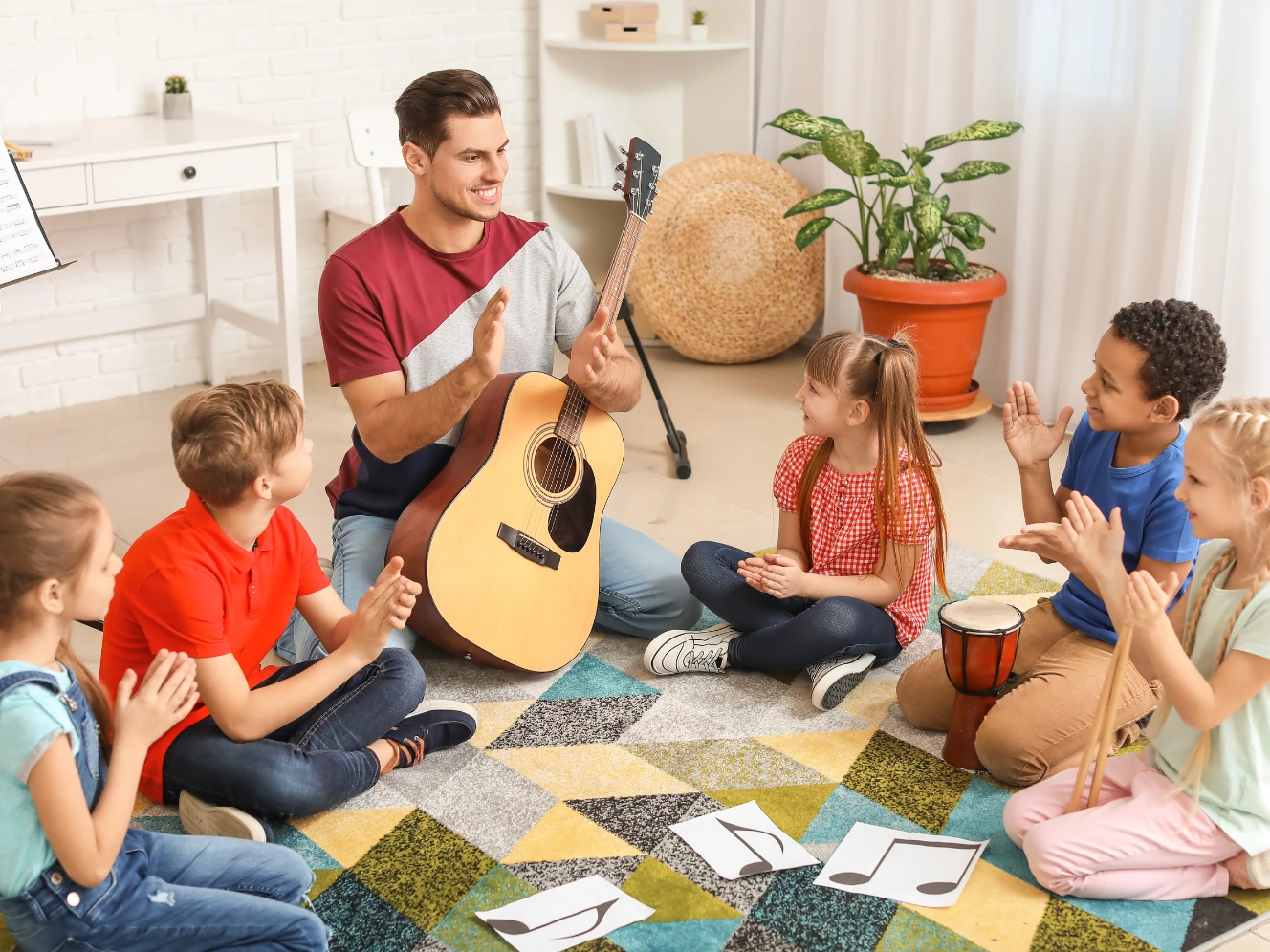
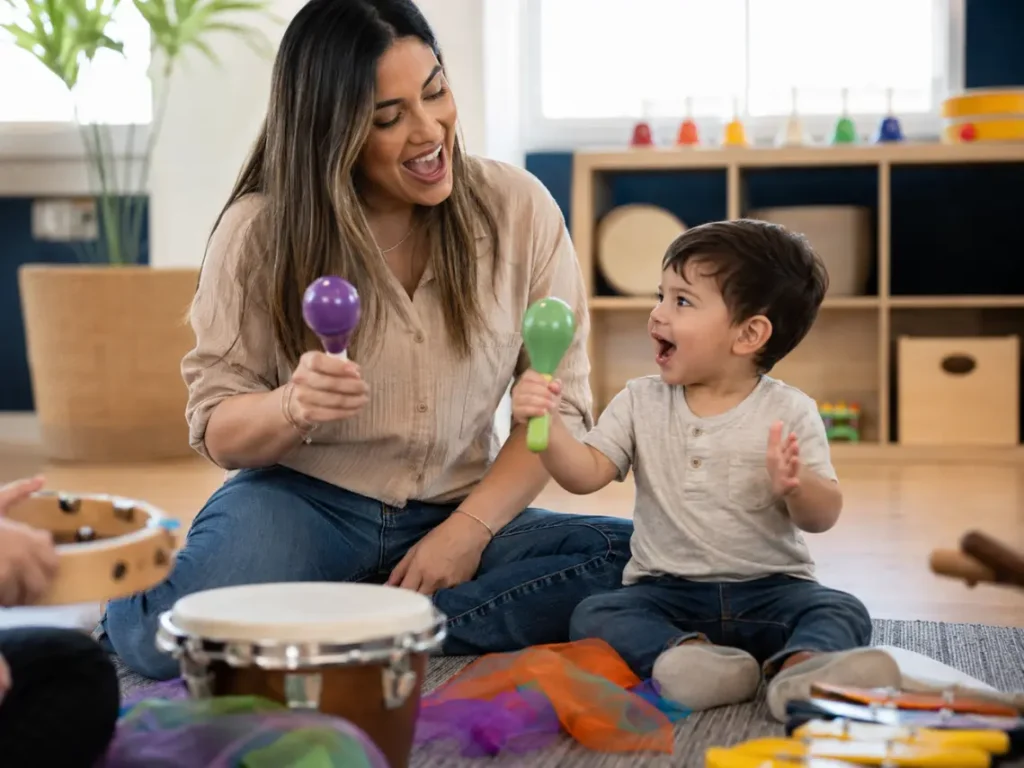
Toddler music lessons are centered around play rather than formal instruction, showing how kids learn through music in a fun and natural way. Children participate in singing, movement, and interactive games that keep them engaged without pressure. This approach allows toddlers to explore music naturally while building confidence. The relaxed environment also encourages participation, even for shy children who may take time to warm up.
Use of Simple Instruments and Props
Instructors introduce toddlers to basic instruments such as shakers, drums, and bells, creating an early foundation for learning musical instruments at any age. These tools help children understand the cause and effect while exploring sound and rhythm. Rotating instruments keeps the experience exciting and prevents boredom. It also gives toddlers a chance to experiment with different sounds, which enhances creativity.
Movement and Sensory Activities
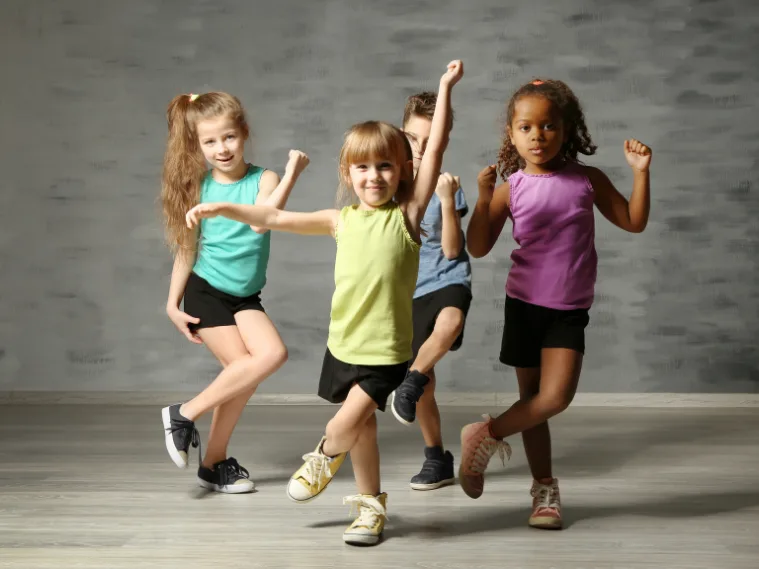
Movement is a key part of toddler music lessons. Activities like jumping, swaying, and marching help children connect music with physical expression. These exercises also support balance and coordination. Sensory elements, such as scarves or props, are often added to make the experience more immersive and engaging.
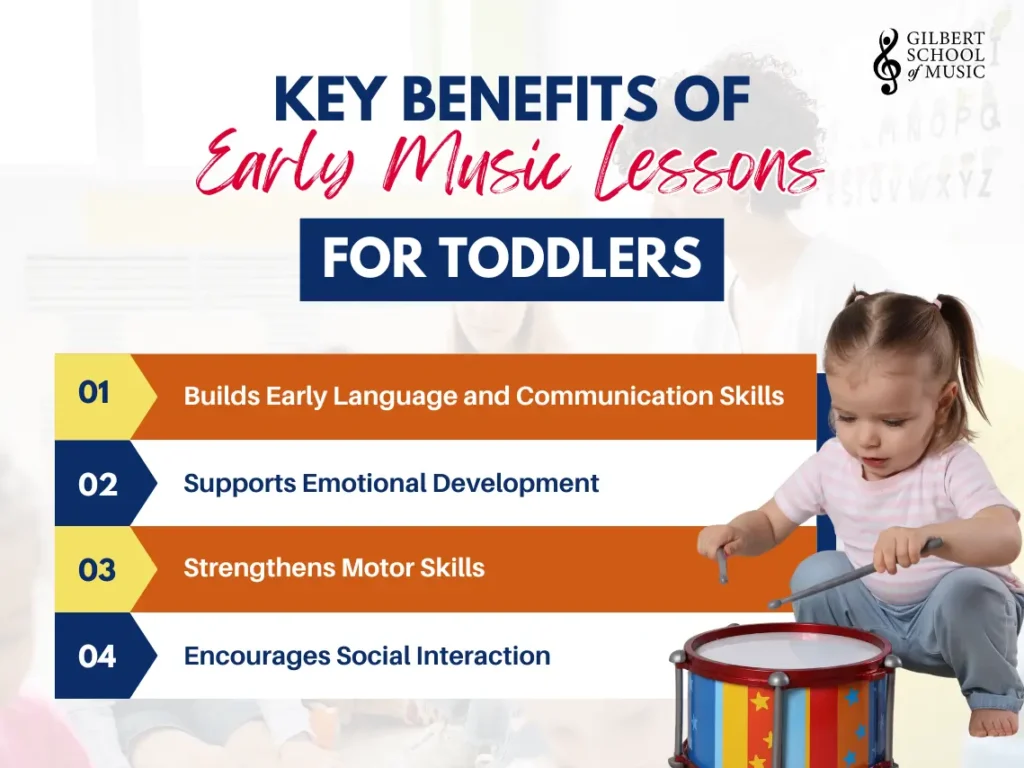
Key Benefits of Early Music Lessons for Toddlers
Music education at an early age offers a wide range of developmental benefits that go far beyond entertainment. Through singing, movement, and interactive activities, toddlers begin building important cognitive, emotional, and social skills in a natural and enjoyable way. Early exposure to music also encourages creativity and curiosity, helping children become more confident as they learn and explore. For many families, music lessons provide a fun and engaging environment where toddlers can grow while developing skills that support long-term learning success.
Builds Early Language and Communication Skills
Music introduces toddlers to new words, sounds, and patterns. Repetition in songs helps reinforce vocabulary and pronunciation. Over time, children become more comfortable expressing themselves verbally. This early exposure to language through music can make a noticeable difference in communication skills.
Supports Emotional Development
Music provides a safe space for toddlers to explore and express their emotions. Whether they’re feeling excited, calm, or curious, music helps them connect feelings with sound. This emotional awareness becomes an important skill as they grow older. It also helps reduce frustration by giving children an outlet for self-expression.
Strengthens Motor Skills
Clapping, dancing, and playing instruments help develop both fine and gross motor skills. These activities improve coordination and physical control. As toddlers practice these movements, they become more confident in their abilities. This foundation supports other physical activities as they grow.
Encourages Social Interaction
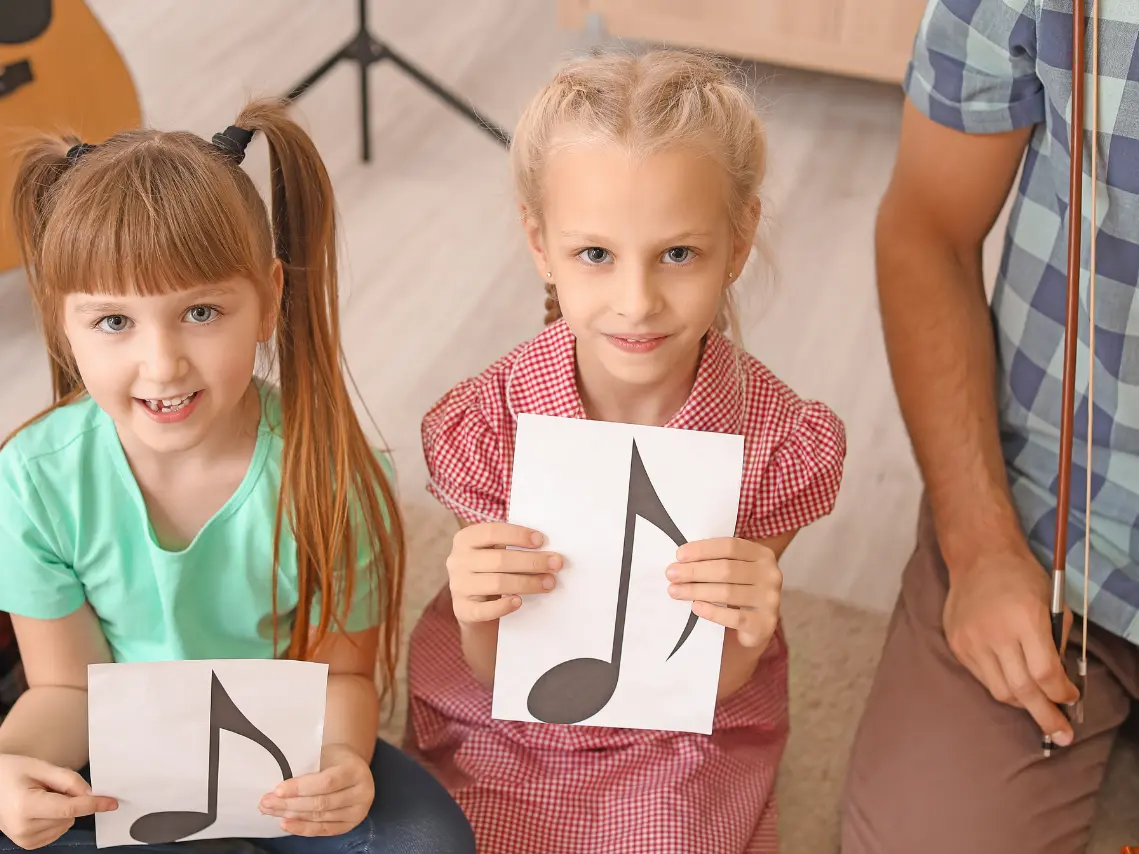
Group music classes teach toddlers how to interact with others. They learn to take turns, follow instructions, and participate in group activities. These social skills are essential for preschool readiness. Being part of a group also helps children feel a sense of belonging and community.
What Parents Should Expect from Toddler Music Programs
Understanding what to expect can help parents feel more confident when enrolling their child in a music program. Toddler music lessons in Gilbert, Arizona are designed to be welcoming, flexible, and developmentally appropriate.
Short, Structured Sessions
Classes are typically 30–45 minutes long, which is ideal for toddler attention spans. Each session follows a loose structure with a mix of activities to keep children engaged. This balance of routine and variety helps toddlers feel comfortable while staying interested. Parents will often notice that their child begins to recognize familiar songs and activities after just a few sessions.
Repetition for Learning
Repetition is a key element in toddler music education. Songs and activities are repeated to help children build confidence and memory. While it may seem simple, this repetition plays a crucial role in reinforcing learning. Over time, toddlers begin to anticipate what comes next, which strengthens their cognitive skills and sense of security.
A Safe and Encouraging Environment
Music classes are designed to be supportive and pressure-free, which is one reason why music lessons in school matter for early childhood development. Instructors encourage participation without forcing it, allowing children to engage at their own pace. This creates a positive learning experience where toddlers feel safe to explore. Parents can expect a welcoming atmosphere where every child’s effort is valued, no matter how small.
How Music Supports Brain Development in Early Childhood
Music is one of the most effective tools for supporting early brain development. It engages multiple areas of the brain simultaneously, helping toddlers build essential cognitive skills.
Strengthening Memory and Focus
When toddlers learn songs or rhythms, they are actively strengthening their memory. Repeating melodies helps improve recall and attention span. These early memory-building exercises support future learning in subjects like reading and math. Over time, children become better at focusing on tasks for longer periods.
Enhancing Pattern Recognition
Music naturally introduces patterns through beats and melodies. Recognizing these patterns is a foundational skill for problem-solving and critical thinking. Toddlers begin to understand sequences, which later supports math and language development. This makes music a fun yet powerful educational tool.
Improving Sensory Integration
Music combines sound, movement, and visual cues, helping toddlers process different types of information at once. This improves sensory integration and overall brain function. Activities that involve multiple senses also make learning more engaging and effective. As a result, toddlers develop stronger connections between different areas of the brain.
Tips for Parents Supporting Music Learning at Home
Parents play an important role in reinforcing what toddlers learn in class. While music lessons in Gilbert, Arizona provide a strong foundation, real growth often happens through everyday interactions at home. Keeping things simple, fun, and consistent can make a big difference in your child’s musical journey.
1. Play Music Daily
Expose your toddler to different types of music throughout the day. Even background music can help build familiarity with rhythm and tone. Try introducing a variety of genres to expand their listening experience. Over time, your child may start reacting differently to each style, showing preferences and emotional connections.
2. Sing Together Often
Singing with your child is one of the easiest ways to support music learning. Repeating simple songs helps reinforce language and memory skills. It also creates meaningful bonding moments. Don’t worry about being perfect—your enthusiasm is what matters most.
3. Encourage Free Movement
Allow your toddlers to move freely to music in their own unique way. This builds confidence and supports physical development. Movement also helps children connect emotionally with music. Whether they’re jumping or swaying, every movement contributes to learning.
4. Use Everyday Sounds as Learning Tools
Turn daily routines into musical opportunities by incorporating rhythm. Clapping, tapping, or stomping can become fun learning activities. These small moments help toddlers understand timing and coordination. Over time, they may even start creating their own rhythms.
5. Stay Consistent with Exposure
Consistency is key when it comes to early music education. Regular exposure helps toddlers feel comfortable and confident. Even a few minutes each day can make a lasting impact. Building a routine around music makes it a natural part of their daily life.
Wrapping Up
Introducing early music lessons in Arizona for toddlers is a meaningful way to support development during a critical stage of life. In Gilbert, Arizona, these programs help children build essential skills while having fun. From cognitive growth to emotional expression, music creates a strong foundation for future learning.
Music has a unique ability to combine joy with education, making it one of the most effective tools for early childhood development. If you’re considering enrolling your toddler in music lessons, now is a great time to explore local options in Gilbert. A simple step today can spark a lifelong love of learning and creativity. Start your child’s musical journey with us today and help them build confidence, creativity, and essential skills through the power of music.
FAQs
What are early music lessons for toddlers in Gilbert, Arizona?
Early music lessons are play-based classes designed to introduce toddlers to rhythm, sound, and movement. These programs focus on development rather than performance. Children learn through singing, dancing, and interactive activities. The goal is to create a fun and engaging learning experience.
How do preschool music lessons help toddlers grow?
Preschool music lessons support language, coordination, and emotional development. Through repetition and movement, toddlers strengthen memory and communication skills. These classes also encourage social interaction with peers. Over time, children become more confident and expressive.
Are music lessons too early for toddlers?
Not at all—music lessons are specifically designed for young children. Activities are simple, engaging, and age appropriate. Toddlers learn naturally through play and exploration. There is no pressure, making it a positive first learning experience.
What happens in a typical preschool music class?
A typical preschool music class includes singing, movement, and instrument play. Sessions are structured but flexible to match toddler attention spans. Teachers guide activities while allowing children to participate at their own pace. The environment is supportive and fun.
How often should toddlers attend music lessons?
Most toddlers benefit from attending music lessons once or twice a week. Regular participation helps reinforce learning and build confidence. Consistency is more important than frequency. Parents can also support learning at home between classes.