

Introduction
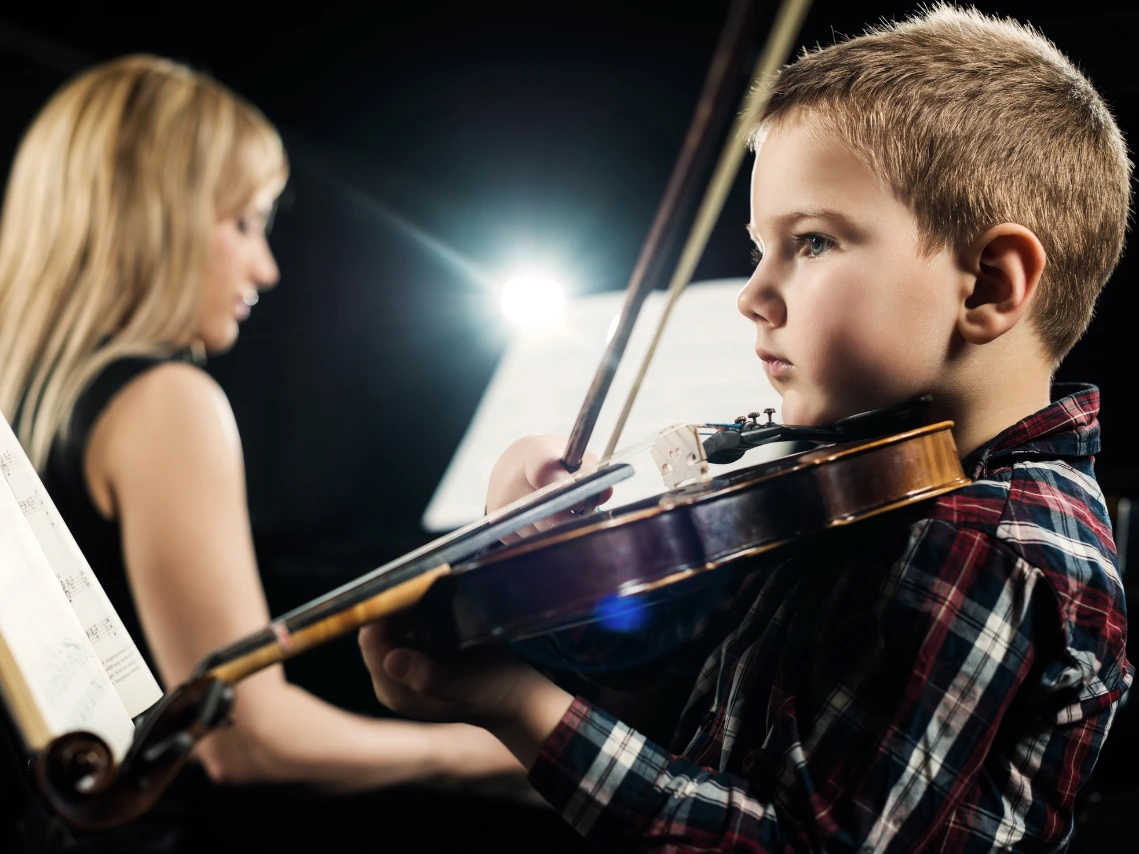
Learning the violin can be an exciting experience for students of all ages. In Gilbert and surrounding Arizona communities, many families look for structured instruction that helps beginners build discipline, confidence, and strong musical skills from the start.
The violin is a beautiful but challenging string instrument, and starting with the right guidance can make a big difference. A patient violin teacher, a supportive learning environment, and consistent practice can help new students develop proper technique without feeling overwhelmed.
Students can learn through a music school, private instruction, group programs, or online violin lessons depending on their goals and schedule.
In this guide, we’ll cover what beginners can expect, the different lesson formats available, the core skills students should develop, and practical tips for building a strong foundation in violin playing.
What to Expect from Beginner Violin Instruction
Beginner violin lessons in Arizona are designed to help students start from zero and build a strong musical foundation step by step.
Early instruction usually focuses on posture, bow hold, finger placement, tone production, rhythm, and basic music reading.
A structured approach helps students understand not only how to play notes, but also how to develop healthy habits from the beginning.
Learning Proper Violin Setup and Posture
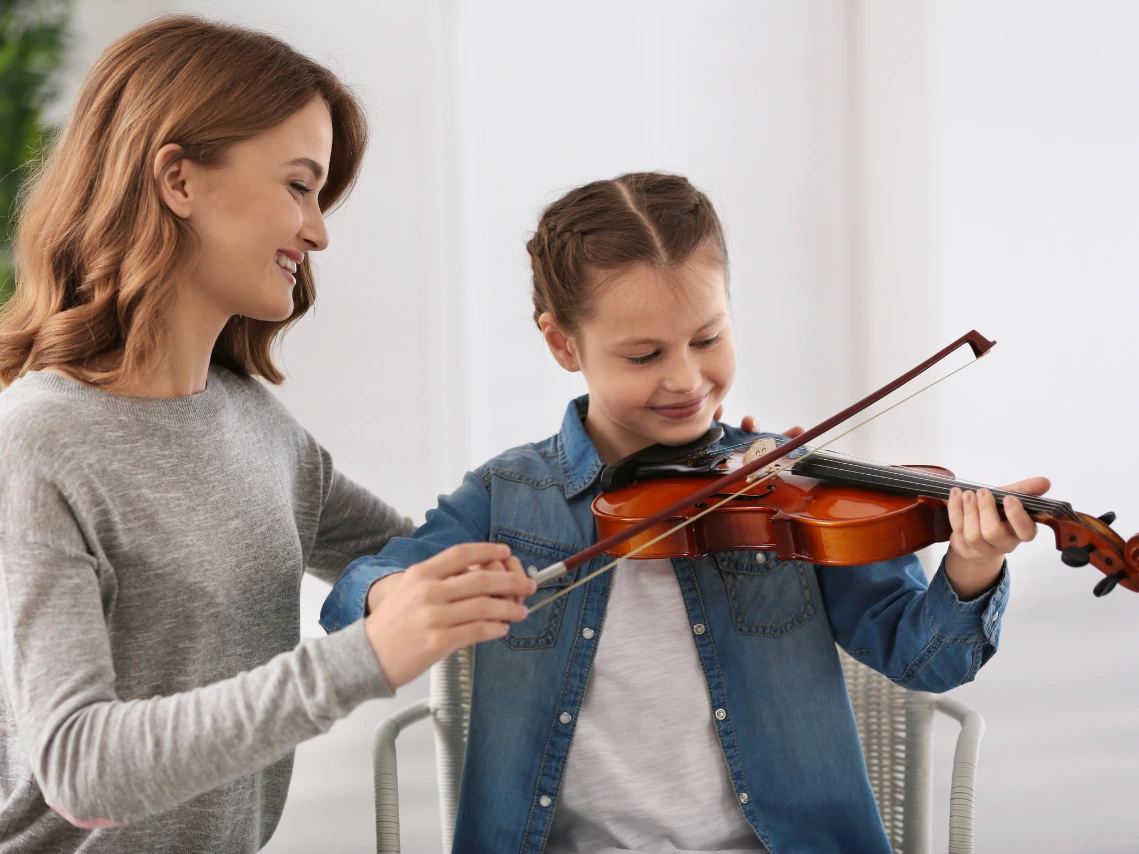
Students begin by learning how to hold the violin and bow correctly and how to start with confidence from the very first lesson.
A teacher may also introduce a shoulder rest, which can help support the instrument and improve comfort depending on the student’s body type and setup.
Proper posture affects balance, bow movement, and sound quality.
Beginners also learn how the left hand supports the neck of the instrument without excessive tension.
Good setup is one of the most important habits students can develop early.
Understanding Basic Sound Production
Producing a clear violin tone takes control.
Beginners learn how to draw the bow across the strings with steady pressure, speed, and placement.
This is the foundation of tone production.
At first, the sound may feel inconsistent, but repetition helps students gain better control.
The goal is not immediate perfection. Students gradually learn how bow movement, posture, and contact point affect the sound.
Introduction to Notes and Sheet Music
Beginner students are gradually introduced to reading music and identifying notes.
Students may begin with open strings, basic rhythms, and simple melodies before progressing to more complex sheet music.
A music stand can help students maintain good posture while reading.
As students improve, they begin connecting written notation with finger placement on the violin.
Basic music theory may also be introduced so students understand rhythm, note values, scales, and how written music is organized.
Ear Training for Beginners
Ear training helps violin students recognize pitch and improve intonation.
Because the violin does not have frets, beginners have to learn where notes should sound rather than relying on fixed markers.
Teachers may ask students to:
- Match pitches
- Listen for notes that sound sharp or flat
- Compare open strings with fingered notes
- Repeat short melodic patterns
These listening skills become increasingly important as students progress.
Short and Focused Practice Sessions
Beginners benefit from a simple practice routine.
Short daily sessions are often more manageable than occasional long sessions.
A beginner practice routine might include:
- 3–5 minutes of posture and bow setup
- 5 minutes of open-string bowing
- 5 minutes of left-hand finger exercises
- 5 minutes of rhythm or sheet music
- 5–10 minutes of songs
This keeps practice focused while helping students build consistency.
Types of Violin Lessons Available
There are several ways students can begin learning the violin, and the right format depends on age, learning style, goals, and schedule.
Private Violin Lessons
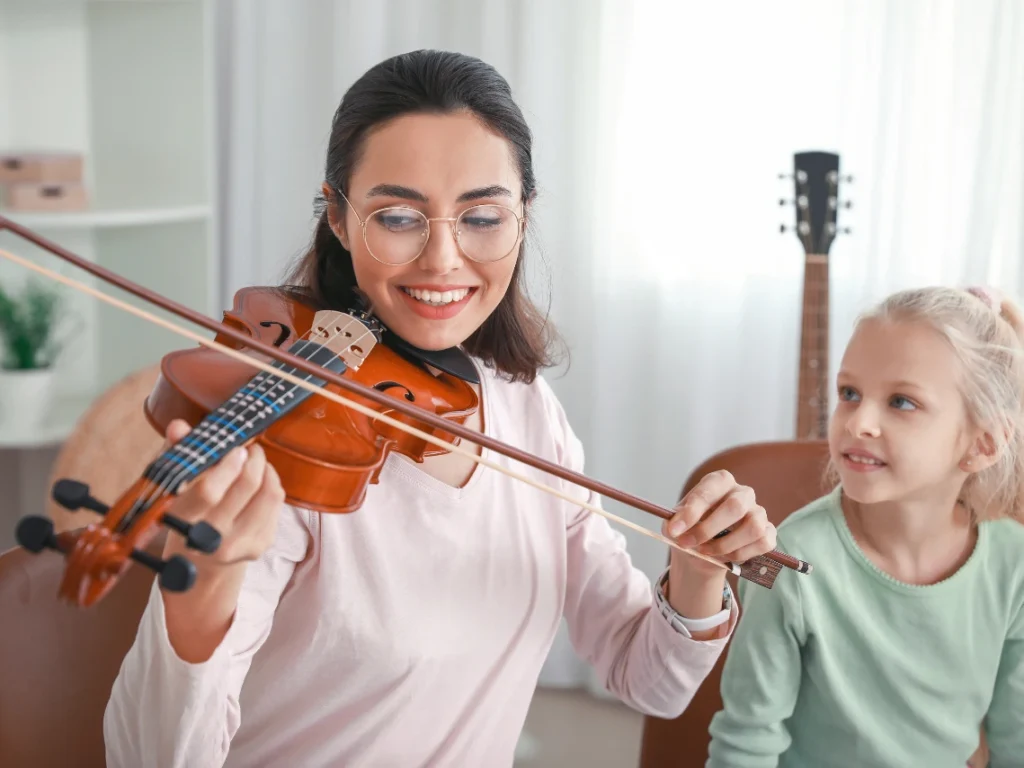
Private violin lessons provide one-on-one instruction tailored to the student’s pace and what to expect with a private violin teacher.
This format allows the teacher to focus closely on posture, bowing, finger placement, tone, and specific challenges.
One-on-one violin instruction can be especially useful for students who need additional feedback or prefer a personalized learning pace.
Group Violin Classes
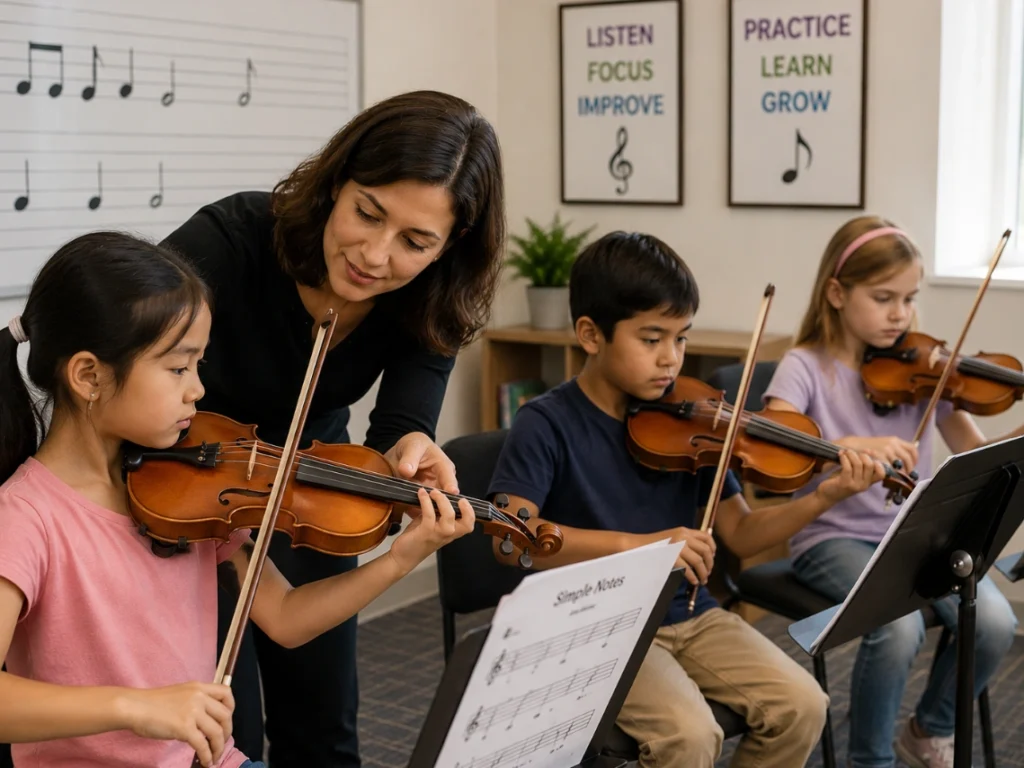
Group lessons allow students to learn alongside peers at a similar level.
This type of learning environment can feel more social and interactive.
Students gain experience listening to others, playing in time, and following group instruction.
Group classes can also prepare students for future chamber music, ensembles, or orchestral playing.
Music School Violin Programs
A music school often provides structured programs that guide students through progressively more advanced skills.
Students may begin with foundational instruction before eventually moving into intermediate violin lessons or advanced violin lessons.
A structured program can also provide:
- Recital opportunities
- Ensemble experience
- Progress tracking
- Performance preparation
- Music theory support
This can be helpful for students who want a long-term learning path.
Online Violin Lessons
Online violin lessons can be useful for students who need more flexibility.
Virtual instruction may include live teacher feedback, video lessons, downloadable materials, practice demonstrations, and digital resources.
Online learning can work especially well when students already have access to a suitable instrument and a quiet practice space.
However, beginners may still benefit from occasional in-person guidance so posture and setup can be checked carefully.
Essential Skills Taught in Early Violin Study
Early instruction focuses on the skills that support everything students will learn later.
Correct Posture and Bow Hold
Students learn how to hold the violin and bow correctly from the beginning.
A comfortable bow hold gives the player better control over tone, dynamics, and articulation.
The shoulder rest, chin placement, and left-hand position also contribute to stable technique.
Left-Hand Finger Placement
The left hand is responsible for placing fingers accurately on the strings.
Because the violin has no frets, even small changes in finger position affect pitch.
Students gradually develop:
- Finger independence
- Accuracy
- Hand shape
- Intonation
- Coordination
These skills improve through repetition and careful listening.
Simple Songs and Classical Pieces
Students are usually introduced to easy songs early so they can apply their new skills in real music.
As they progress, they may begin exploring short classical pieces, folk melodies, and other beginner-friendly repertoire.
Playing complete pieces gives students a sense of accomplishment and helps reinforce posture, rhythm, and note reading.
Basic Rhythm and Timing
Understanding rhythm is essential for violinists.
Beginners learn how to count beats, recognize note values, and follow basic rhythmic patterns.
Teachers may use clapping, counting, metronome exercises, and simple sheet music to make rhythm easier to understand.
Music Reading and Theory
Music reading helps students connect written notation to the sounds they produce.
Basic music theory may include:
- Note values
- Time signatures
- Scales
- Key signatures
- Rhythmic patterns
- Simple musical form
This foundation becomes more valuable as students move into longer and more advanced repertoire.
What to Look for in Violin Lessons in Arizona
Choosing the right program can strongly influence a student’s experience with learning the violin.
A Patient Violin Teacher
Students need a violin teacher who understands that progress takes time.
A good instructor should explain concepts clearly, demonstrate techniques, and help students work through challenges without rushing.
When students start learning violin lessons, encouragement and clear feedback can make the process feel much more manageable.
Clear Step-by-Step Structure
Strong programs follow a logical sequence.
Students should learn one skill before being expected to apply several new techniques at once.
For example:
- Posture and setup
- Bow control
- Open strings
- Left-hand placement
- Simple rhythms
- Easy songs
- Reading sheet music
This keeps the learning process organized.
Engaging Teaching Methods
Younger students often benefit from games, songs, visual aids, and creative exercises.
Older beginners may prefer direct explanations, structured goals, and measurable progress.
A flexible teacher adapts instruction to the student’s musical interests, age, and learning style.
Flexible Scheduling and Consistency
Consistency matters, but lesson schedules also need to work for families.
Weekly instruction combined with regular practice usually gives students enough time to reinforce new skills before learning something new.
The goal is to create sustainable practice habits, not an unrealistic schedule.
Why Families Choose Gilbert School of Music for Violin Lessons
When searching for violin instruction in Gilbert, AZ, families often look for patient teachers, structured programs, and an encouraging learning environment.
At Gilbert School of Music, students can develop foundational skills through step-by-step instruction designed to support technique, confidence, and musical understanding.
Lessons can be adapted to each student’s age, experience level, and musical interests.
A supportive music school can also give students opportunities to develop broader musical skills beyond individual lessons.
As students grow, they may become interested in chamber music, orchestral playing, recitals, or more advanced repertoire.
Tips for New Violin Students
Progress depends on both instruction and practice habits.
Build a Consistent Practice Routine
A simple practice routine can make learning feel more manageable.
Instead of practicing randomly, students can divide time between:
- Bowing
- Left-hand exercises
- Rhythm
- Sheet music
- Songs
- Ear training
Consistency matters more than practicing for long periods only once or twice a week.
Focus on Proper Technique Early
Good technique should come before speed.
Students should prioritize correct posture, bow control, relaxed hand position, and accurate finger placement.
Strong fundamentals make more advanced playing easier later.
Use Video Lessons for Review
Video lessons can be useful between live sessions.
Students can review demonstrations of posture, bowing, tuning, fingering, and rhythm exercises.
These resources should supplement—not replace—feedback from a teacher, especially for beginners.
Be Patient with Progress
Learning the violin takes time.
Students may initially struggle with intonation, bow control, and coordination.
Progress becomes easier to notice when goals are specific.
Instead of aiming to “get better,” a student might work toward:
- Playing one scale cleanly
- Improving one bowing pattern
- Reading a short passage
- Holding posture correctly for an entire song
Small wins support long-term musical growth.
Moving Beyond the Beginner Stage
As students develop stronger fundamentals, their goals usually change.
Intermediate violin lessons may introduce:
- More complex rhythms
- Position changes
- Expanded scales
- Vibrato preparation
- Longer classical pieces
- More detailed music theory
Advanced violin lessons may focus more heavily on interpretation, advanced bowing, audition material, chamber music, and orchestral playing.
Students who progress through each stage gradually are more likely to maintain strong technique.
Online vs. In-Person Violin Lessons
Both formats can work depending on the student.
| Format | Best For |
|---|---|
| In-person lessons | Beginners who need hands-on guidance with posture and setup |
| Online violin lessons | Students who need scheduling flexibility |
| Private violin lessons | Personalized instruction and targeted feedback |
| Group classes | Social learning and ensemble skills |
Online instruction may also include video lessons, Audio Files, digital sheet music, and other resources.
In-person lessons are especially useful when the teacher needs to closely observe bow angle, left-hand tension, or shoulder rest placement.
Wrapping Up
Getting started with violin instruction is an exciting step that can build creativity, discipline, confidence, and musical skills.
The most important factors are finding a patient teacher, choosing a supportive learning environment, and building consistent practice habits.
Students who develop strong posture, bow hold, left-hand technique, tone production, music reading, and ear training early will have a much stronger foundation for future progress.
Exploring violin lessons in Gilbert, Arizona can be the first step toward a lifelong appreciation for music and performance.
Gilbert School of Music provides structured instruction designed to help students develop confidence, strong fundamentals, and long-term musical growth.
FAQs
Are violin lessons difficult for beginners?
The violin can feel challenging at first because students have to manage posture, bowing, finger placement, and pitch at the same time.
A patient teacher and structured practice routine can make the process much easier.
What age can children start learning the violin?
Many children begin around ages 5–7, although readiness depends on attention span, physical comfort, and interest.
A teacher can help determine whether a student is ready to begin.
How often should beginners practice?
Short, consistent practice is usually more effective than occasional long sessions.
Many beginners start with around 15–30 minutes per day and adjust as their endurance and skill grow.
Do beginners need their own violin?
Having access to a violin at home is important because students need to practice between lessons.
Teachers can also help families choose the correct instrument size.
Do beginners need sheet music?
Students usually begin with very simple notation before gradually working with more detailed sheet music.
Music reading is introduced step by step so students can connect notes on the page with notes on the violin.
Are online violin lessons effective?
They can be effective for motivated students, especially when combined with teacher feedback.
For complete beginners, some in-person instruction can still be useful for checking posture, bow hold, shoulder rest placement, and left-hand position.