

Introduction
Music is one of the most rewarding skills to learn, and the piano is often the first choice for beginners because of its clear layout and ability to teach both melody and harmony at the same time. For children, teens, and adults alike, it builds discipline, coordination, and creativity in a structured but enjoyable way.
For learners in Nevada, beginner piano lessons are widely available in different formats and teaching styles. This guide will help you understand what beginner lessons involve, how to choose the right program, what progress looks like, and how to set yourself or your child up for long-term success.
Understanding What Beginner Piano Lessons Focus on and Why They Matter
Beginner piano lessons are designed to build the foundation needed for long-term musical growth. This stage focuses on simple skills, proper habits, and gradual learning rather than complex performance. In Nevada, most programs are structured to help students feel comfortable and confident from the very first lesson.
Learning the keyboard layout and basic hand positioning
At the start, students learn how the piano is organized, including white and black keys, finger numbers, hand posture, and understanding pedals on a piano. These basics are essential because they affect how easily and correctly a student can play in the future. Good instructors focus heavily on building correct habits early.
Developing rhythm and simple reading skills
Beginners are gradually introduced to rhythm patterns and basic sheet music reading. Instead of overwhelming students with theory, instructors simplify concepts step by step. This helps learners understand music visually and rhythmically in a manageable way.
Playing simple songs to build confidence
One of the most motivating parts of beginner lessons is learning real songs, including easy basic piano songs, from early on. These are often simplified versions of familiar melodies that help reinforce basic skills. This approach keeps students engaged while building confidence through achievement.
Most Effective Learning Formats for Beginner Piano Students
Beginner piano lessons in Nevada come in different formats, and choosing the right one depends on learning style, personality, and goals. Each format offers unique benefits that affect progress and engagement.
Private lessons for focused, personalized learning
Private lessons provide one-on-one instruction tailored to the student’s pace and ability. This allows instructors to correct mistakes quickly and adjust teaching methods as needed. It is especially effective for beginners who need extra guidance or structure.
Group classes for motivation and social learning
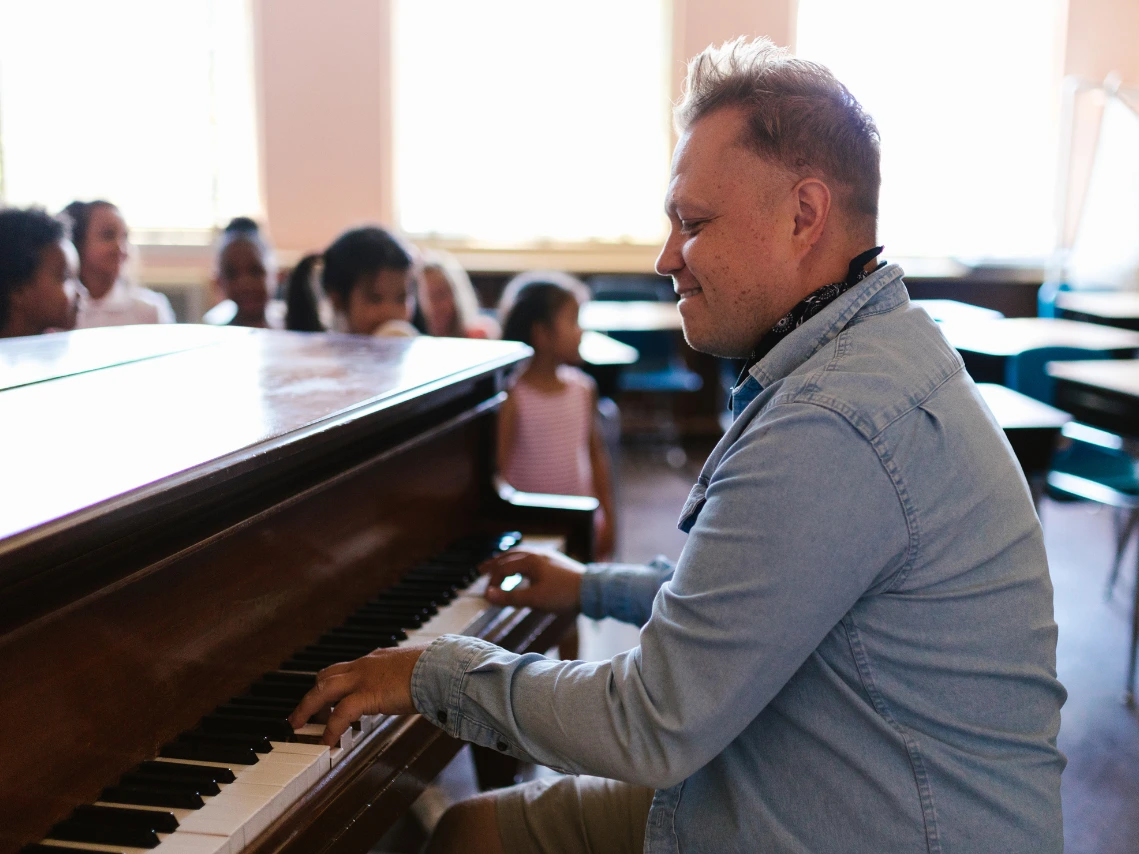
Group lessons allow students to learn alongside peers, which can increase motivation and enjoyment. Watching others’ progress can also help reinforce learning. In Nevada, group classes are often used to introduce beginners to music in a more relaxed environment.
Hybrid programs combining both approaches
Some programs offer a mix of private and group lessons to balance structure and interaction, including options for learning piano as an adult. This allows students to benefit from individual attention while still experiencing group learning dynamics. It is a flexible option for many beginners.
What Makes a Strong Beginner Piano Program
Not all beginner piano programs are the same, and quality can significantly impact progress. In Nevada, strong programs are designed to make learning structured, enjoyable, and progressive from the very beginning.
Clear lesson progression without rushing
A strong program introduces skills gradually so students can fully absorb each concept. Beginners should never feel rushed into advanced material too quickly. This steady progression helps build long-term confidence and understanding.
Focus on building strong foundational skills
Good programs prioritize posture, finger control, and rhythm before moving into complex pieces. These fundamentals prevent bad habits and make future learning easier. A strong foundation is key to long-term success in piano.
Encouraging and supportive teaching style
Beginners need motivation to stay consistent, especially in the early stages. A supportive instructor celebrates small wins and helps students stay engaged. Positive reinforcement plays a big role in maintaining interest and progress.
Common Challenges and How Beginners Overcome Them
Starting piano is exciting, but beginners often face a few predictable challenges. In Nevada, good instructors are trained to help students overcome these gradually and confidently.
Coordinating both hands while playing
One of the first difficulties is learning to use both hands independently. This feels unnatural at first but improves with practice and repetition. Simple exercises help build coordination over time. Students also benefit from slowing down the tempo to focus on accuracy before speeding. With consistent practice, this skill becomes more natural and fluid in everyday playing.
Learning to read sheet music
Reading music can feel confusing in the beginning, especially for younger learners. However, breaking it into small steps makes it easier to understand. With time, note reading becomes automatic and intuitive.
Building consistent practice habits
Many beginners struggle with practicing regularly outside of lessons. Short, consistent practice sessions are more effective than long, irregular ones. Routine is key to steady improvement.
Choosing the Right Piano Instructor in Nevada for Beginners
A good instructor can make a significant difference in how quickly and confidently a beginner progresses. In Nevada, experienced teachers understand how to guide students through early challenges effectively.
Experience working with beginners
Beginner-focused instructors know how to simplify concepts and avoid overwhelming students. They understand how to introduce skills in a logical and encouraging way. This makes the learning process smoother and more enjoyable.
Clear communication and adaptable teaching style
Every student learns differently, so flexibility is important. A good teacher adjusts their approach based on how the student responds. Clear communication ensures that students understand what they are learning and why it matters.
Ability to keep lessons engaging and fun
Engagement is essential for beginners to stay motivated, and group piano lessons make learning easier by creating a supportive and interactive environment. Instructors often use songs, games, and interactive exercises to maintain interest. Enjoyable lessons lead to better consistency and faster progress.
What Progress Looks Like for Beginner Piano Students
Progress in beginner piano is gradual and should be measured by small but meaningful improvements. In Nevada, structured programs help students move through these stages naturally. Consistent practice also helps students stay motivated as they notice steady development in their skills. Every small achievement builds the foundation for long-term musical growth.
Ability to play simple songs confidently
Early progress includes playing basic melodies with both hands. This builds confidence and reinforces coordination skills. It is often the first major milestone for beginners. Students also begin to understand how to memorize piano music through repetition and familiarity with patterns. This stage helps them transition from learning notes to actually making music.
Improved rhythm and timing control
As students advance, they begin to develop better timing and rhythm accuracy. This allows them to play more smoothly and consistently. Rhythm is a core skill in all music learning. They also start recognizing how rhythm exercises for musicians improve overall performance. With stronger timing control, students can play pieces with greater expression and flow.
Increasing independence in practice
Beginners gradually become more comfortable practicing on their own and often gain inspiration by observing famous piano performers. They start recognizing patterns and correcting small mistakes independently. This independence is a strong indicator of growth.
Supporting Beginner Piano Learning Outside the Classroom
Learning does not stop after lessons—it continues at home through simple reinforcement. In Nevada, students who practice regularly outside class tend to progress faster and more confidently, especially when they understand how to memorize piano music effectively.
Creating a simple and consistent practice routine
Even 15–20 minutes of daily practice can significantly improve my skills. Consistency helps reinforce what is learned in lessons. A simple routine is more effective than occasional long sessions, especially when practicing rhythm exercises for musicians.
Encouraging musical exploration and enjoyment
Allowing beginners to explore different sounds and songs, including easy piano basic songs, keeps learning fun. This helps build curiosity and personal connection to music. Enjoyment is key to long-term engagement.
Using digital tools for reinforcement
Apps and online tutorials can help reinforce lesson material in a fun way. These tools provide additional practice opportunities outside class and help improve your musical skills. When used correctly, they enhance learning and understanding.
Wrapping Up
Beginner piano lessons in Nevada provide a structured yet flexible pathway for anyone starting their musical journey. The key to success is choosing the right instructor, lesson format, and learning environment that matches the student’s pace and personality. At this stage, consistency and enjoyment matter more than speed or perfection.
With the right guidance and practice habits, beginners can build strong musical foundations and develop a lifelong appreciation for piano. If you are starting your journey in Nevada, focus on programs that prioritize fundamentals, engagement, and steady progress. Start your piano journey today and take the first step toward confident and enjoyable playing.
FAQs
Are beginner piano lessons in Nevada suitable for adults?
Yes, beginner piano lessons in Nevada are suitable for all ages, including adults. Many programs are designed specifically for adult beginners with flexible pacing. Adults can learn effectively with consistent practice and the right instructions. It is never too late to start learning piano.
How long does it take to learn basic piano skills?
Most beginners can learn basic piano skills within a few months of consistent practice. This includes simple songs, rhythm, and note reading. Progress depends on practice frequency and lesson quality. Structured programs in Nevada help accelerate learning.
Do I need a piano at home to start lessons?
While not required, having a keyboard or piano at home is highly recommended. It allows for regular practice between lessons, which is essential for progress. Even a basic keyboard is sufficient for beginners.
Should beginners choose private or group lessons?
Both options work well depending on the learning style. Private lessons offer personalized attention, while group classes provide motivation and interaction. Many beginners try both before deciding what works best.
What is the hardest part of learning piano as a beginner?
Most beginners find coordination between both hands and reading music the most challenging at first. However, these skills improve quickly with repetition and guidance. A good instructor helps break these challenges into simple steps.