


Have you ever wondered why so many successful and creative individuals credit music for their achievements? Behind every melody and rhythm is a powerful combination of listening, memory, movement, emotion, and creativity. Music education does more than teach someone how to play an instrument—it gives the brain opportunities to develop and practice a wide range of skills.
Whether you’re an aspiring musician, dancer, creative professional, parent, or simply curious about its benefits, here are 17 ways music education can influence the way you think, create, communicate, and grow while supporting healthy brain development.
1. Music Enhances Cognitive Function
Music education gives the brain a unique mental workout. Playing an instrument can involve reading sheet music, listening carefully, remembering sequences, controlling movement, and responding to rhythm at the same time.
These overlapping tasks engage multiple areas of the brain and help reinforce neural connections associated with memory, attention, listening, and movement.
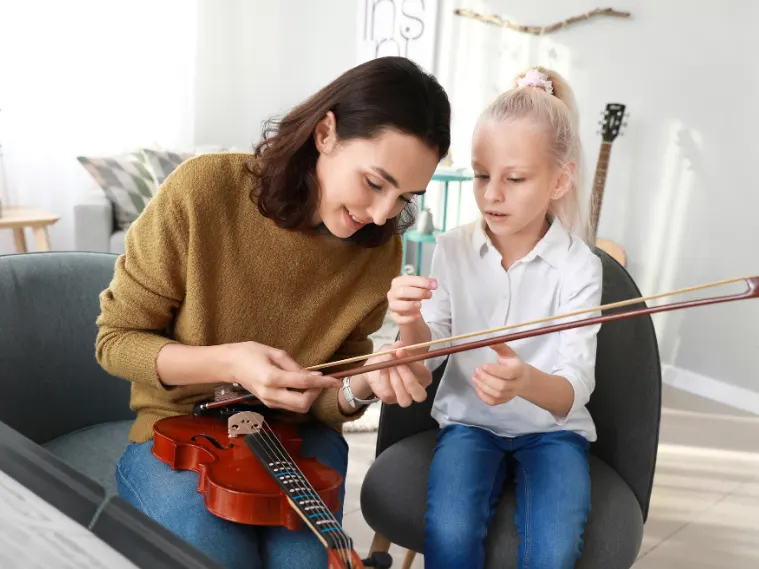
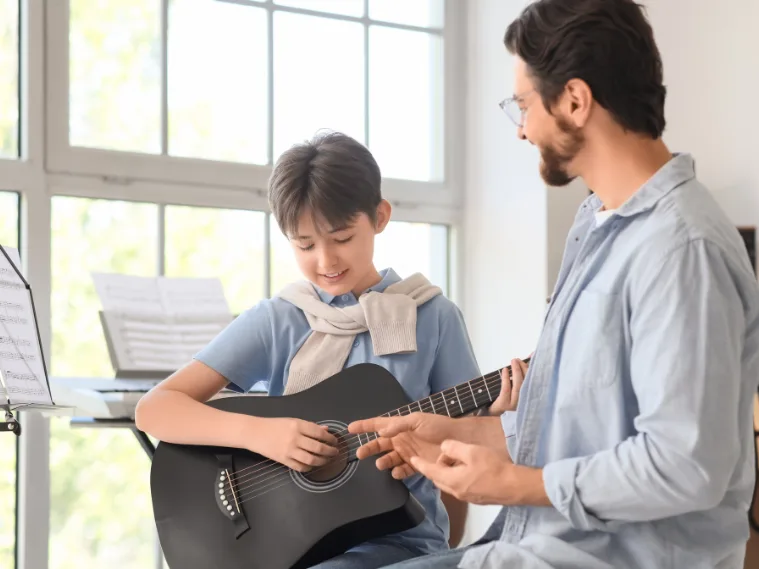
Students taking structured music courses, group instruction, or Private Lessons regularly practice concentration, recall, timing, and coordination.
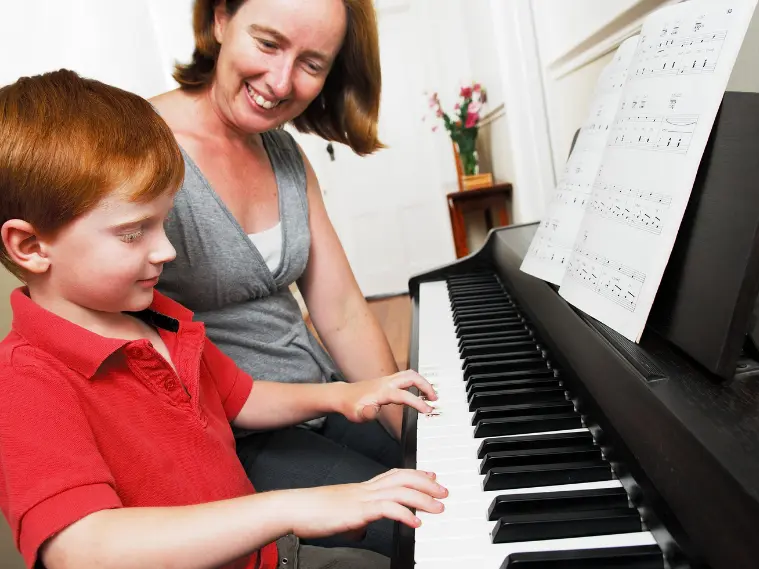
Consider everything a pianist does while performing a piece. The player reads notes ahead of time, remembers patterns, controls two hands independently, listens for mistakes, maintains rhythm, and interprets the music.
That level of mental engagement illustrates why musical training can challenge several cognitive abilities simultaneously.
2. Music Boosts Creativity
Music gives students countless opportunities to experiment and make creative decisions.
Playing, improvising, songwriting, and composing original music all require musicians to think beyond simply reproducing notes correctly.
Creating musical compositions, for example, involves decisions about melody, rhythm, harmony, structure, dynamics, and expression. There isn’t always one correct solution, which encourages students to explore possibilities and develop their own artistic ideas.
As students gain confidence, they may begin creating original music inspired by different music genres, giving them another way to experiment with melody, rhythm, harmony, and personal expression.
Improvisation works in a similar way. Musicians have to respond to what they hear and make decisions in real time.
Over time, this process can help students become more comfortable experimenting, adapting, and expressing their own ideas.
3. Music Improves Language Skills
Music and language share important listening skills.
Both involve rhythm, patterns, memory, timing, and auditory processing. Musical training teaches students to pay attention to subtle differences in pitch, duration, tone, and rhythm.
Repeated listening exercises further develop auditory processing by asking students to recognize whether notes are higher or lower, identify rhythmic differences, and reproduce sounds accurately.
Young learners can practice these abilities through singing, rhythm activities, repetition, and interactive games.
For young learners, music-based games that combine singing, listening, movement, and repetition can make early musical experiences more interactive while reinforcing attention and memory.
Singing in different languages can also introduce unfamiliar sounds and pronunciation patterns.
These experiences make music a useful way to practice attentive listening while giving students another form of communication and expression.
4. Music Sharpens Mathematical Skills
Music and mathematics both rely heavily on patterns, sequences, proportions, and timing.
When students read sheet music and count rhythms, they encounter relationships similar to mathematical fractions. Whole notes, half notes, quarter notes, and eighth notes divide musical measures into different values.
Students also have to recognize repeating patterns, understand tempo, count beats, and anticipate what happens next.
These activities exercise spatial-temporal reasoning because musicians must understand how patterns and events relate to one another over time.
Structured music education therefore provides a practical setting in which students encounter counting, sequencing, musical structure, and pattern recognition while learning to interpret rhythm and sheet music.
5. Music Develops Discipline and Perseverance
Learning an instrument requires patience.
A difficult passage usually doesn’t become easy after playing it once. Students may need to slow it down, isolate challenging measures, correct mistakes, and repeat the passage many times.
This teaches an important lesson: progress often happens gradually.
Students also learn to establish practice routines, prepare assignments, respond to feedback from music teachers, and work toward short- and long-term goals.
Those habits can help students understand the relationship between consistent effort and improvement—something that can be useful far beyond music.
6. Music Fosters Emotional Expression
Music provides a way to communicate emotions without relying entirely on words.
A musician can change the feeling of a piece through tempo, dynamics, articulation, phrasing, and tone. Two people can even perform the same composition differently because each brings an individual interpretation to the music.
This freedom encourages musical expression and gives students an opportunity to communicate personality, mood, and ideas through sound.
Music therapy provides a more specialized example of how musical experiences may be used in structured therapeutic settings to support emotional, cognitive, physical, or social goals.
For everyday students, simply playing, singing, composing, or listening can provide an enjoyable creative outlet.
7. Music Enhances Coordination
Playing an instrument requires the brain and body to work together.
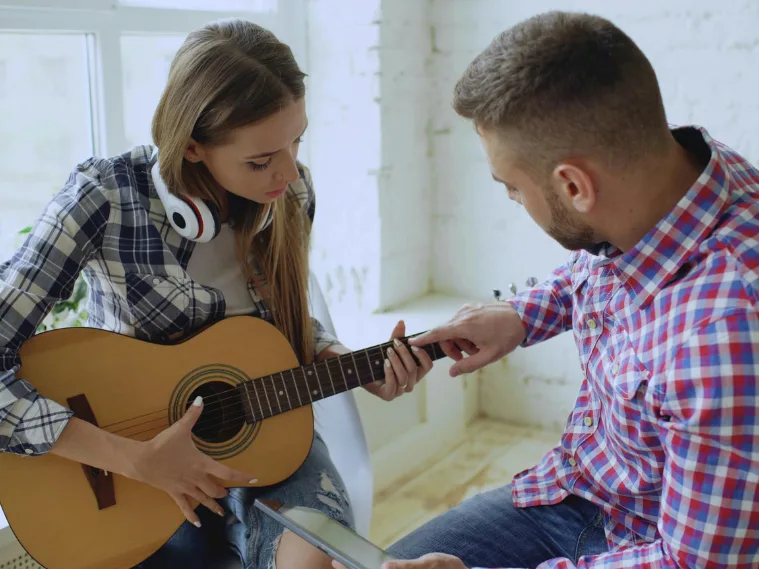
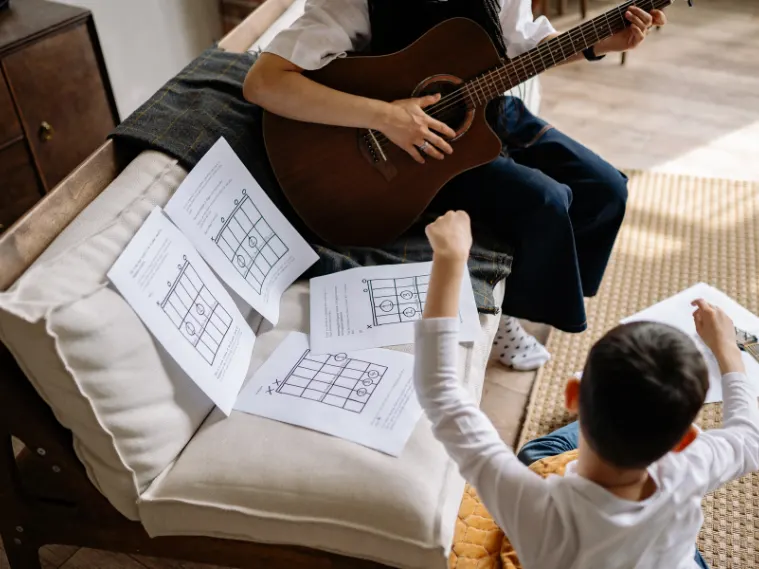
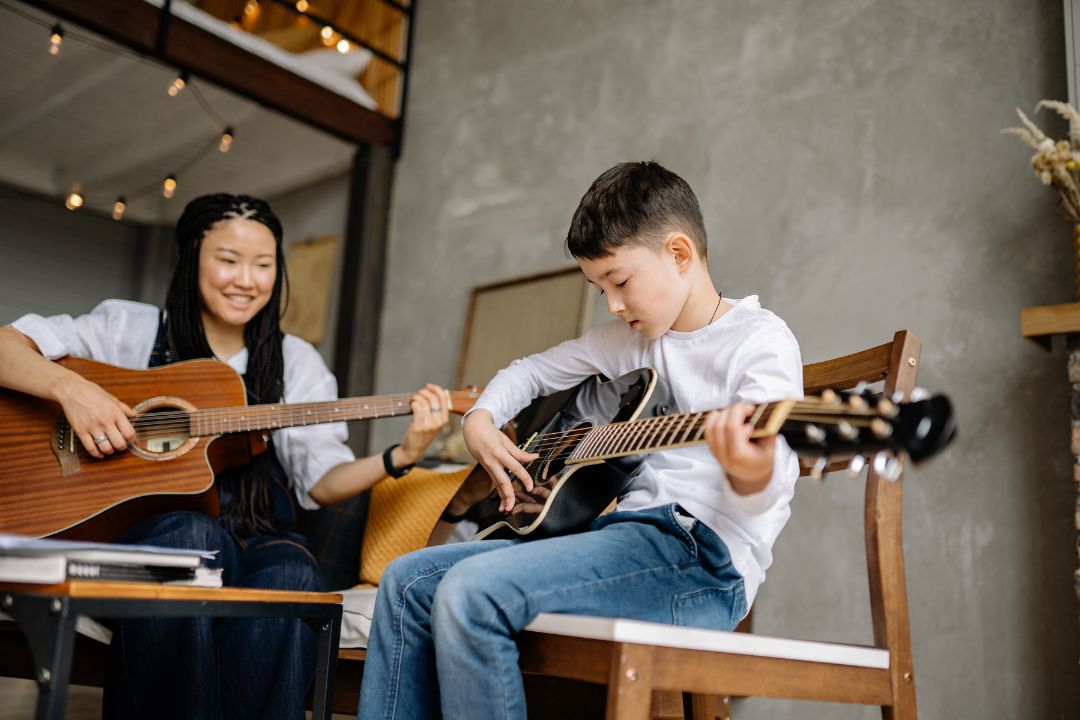
A guitarist coordinates fretting with one hand while strumming or picking with the other. Pianists may perform completely different movements with each hand. Drummers often coordinate their hands and feet simultaneously.
Percussion Instruments can be especially demanding because rhythm, timing, striking technique, and multiple limb movements may all need to happen together.
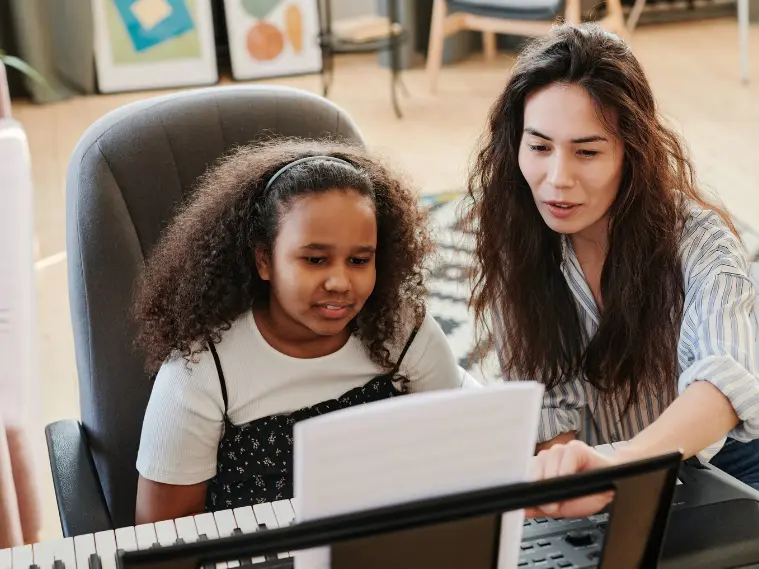
Structured music instruction gives students opportunities to practice these movements with feedback from experienced music teachers.
With repetition, movements that initially require intense concentration can gradually become more natural and controlled.
8. Music Builds Confidence
Musical progress gives students visible evidence that practice can lead to improvement.
A beginner might initially struggle to play a scale, change chords, or maintain a steady beat. Eventually, that same student may perform an entire song.
Performances provide another opportunity for growth.
Preparing for a recital or playing for other people requires students to practice, manage nerves, recover from mistakes, and trust their preparation.
Each milestone can contribute to greater self-confidence and a willingness to take on new challenges.
A supportive music education environment gives students opportunities to celebrate these milestones while continuing to work toward new goals.
9. Music Promotes Social Skills
Music is often collaborative.
Bands, orchestras, choirs, and other ensembles require musicians to listen closely to one another rather than focusing only on their individual parts.
In these ensemble situations, students learn when to lead, when to follow, how to adjust their volume or timing, and how their individual contribution affects the larger group.
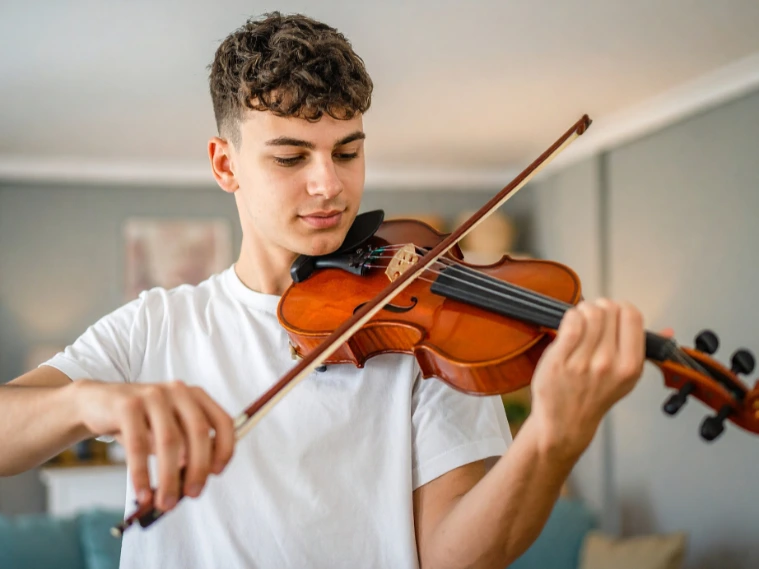
Chamber Music provides a good example. Because small ensembles may perform without a conductor, musicians have to communicate closely, listen carefully, and respond to one another throughout the performance.
Students participating in Chamber Music also learn how to balance their own musical part with the sound and timing of the full ensemble.
These experiences can strengthen cooperation, listening, communication, and respect for other participants.
10. Music Reduces Stress and Encourages Relaxation
Music can also provide a welcome break from everyday pressures.
Playing a familiar piece, singing, improvising, or simply listening can shift attention away from stressful thoughts and toward a focused activity.
Slow, gentle music may encourage relaxation, while energetic music can provide a positive emotional outlet.
The experience varies from person to person, but many people naturally incorporate music into routines for relaxation, reflection, exercise, celebration, and emotional expression.
11. Music Improves Auditory Processing
Musical training teaches students to listen differently.
Instead of hearing music as one complete sound, students gradually learn to identify individual details: pitch, rhythm, harmony, dynamics, articulation, tone quality, and timing.
That repeated listening exercises auditory processing.
For example, students may need to determine whether they are playing in tune, recognize a rhythmic mistake, match a pitch by ear, or identify differences between two musical phrases.
These listening skills become increasingly refined as students gain experience.
12. Music Strengthens Neural Connections
Playing music is a highly integrated activity.
A musician may simultaneously read notation, remember instructions, listen to pitch, control precise movements, maintain rhythm, and anticipate upcoming notes.
Because so many processes happen together, musical practice repeatedly engages networks associated with hearing, movement, memory, attention, and coordination.
Music lessons give students opportunities to repeat and refine these processes over time.
This is also why beginners benefit from musical training. Learning music continually presents the brain with new patterns, movements, sounds, and challenges to understand.
13. Music Enhances Sensory Integration
Music combines several senses into one activity.
Students see notes or chord symbols, hear the sounds they produce, and physically feel the instrument in their hands.
A pianist reads notation while feeling the resistance of the keys and listening to the resulting sound. A guitarist watches hand placement, feels the strings, and listens for accurate pitch. A drummer combines visual, auditory, and physical information while maintaining rhythm.
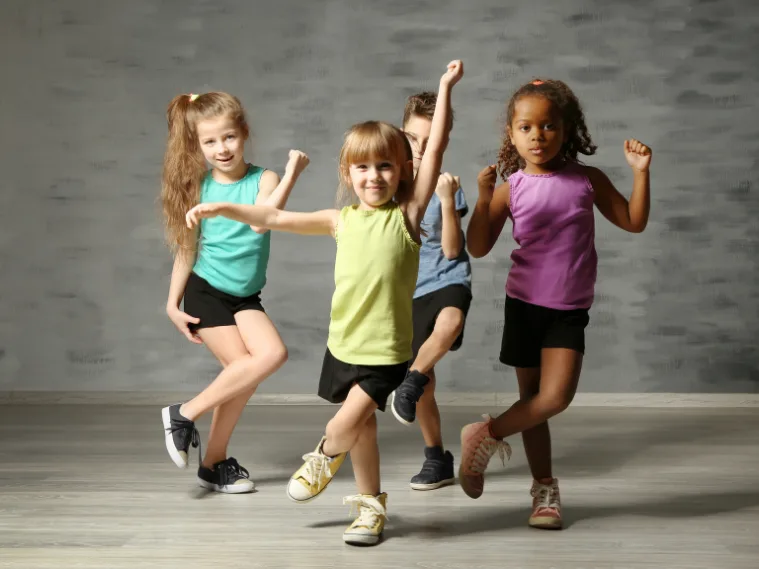
For younger students, Movement and dance can add whole-body motion to the experience.
This combination makes playing music much more than an auditory activity—it requires the brain to coordinate information from several sources at once.
14. Music Improves Spatial-Temporal Reasoning
Music unfolds over time, which means musicians must constantly think ahead.
While performing one note or measure, an experienced player is already preparing for what comes next.
Students learn to recognize patterns, understand musical form, follow sequences, maintain timing, and predict transitions.
These skills involve spatial-temporal reasoning and help explain why music requires both immediate attention and forward planning.
As pieces become more complex, students have to manage longer sequences and understand how smaller musical ideas fit into the complete composition.
15. Music Promotes Lifelong Learning
There is no age limit for studying music.
Children may begin with introductory activities, while teenagers and adults can start an instrument for the first time or return after years away.
Some students prefer individual instruction, while others enjoy ensembles, group programs, workshops, or summer camps. Seasonal summer camps can give students an additional opportunity to explore instruments, performance, and creativity outside their regular lessons.
Different forms of music programming can serve different ages, experience levels, and goals.
When comparing programs, families can review the Class Schedule, course descriptions, and available lesson times to understand what is offered. Checking the Class Schedule in advance can also help families find an option that works with school, work, and other activities.
Some schools may also provide instrument rentals, additional summer camps, or other seasonal opportunities.
The variety of available formats makes music something people can continue exploring throughout different stages of life.
16. Music Encourages Cultural Awareness
Music provides a direct connection to cultures, communities, and traditions around the world.
Different styles carry distinctive rhythms, instruments, performance practices, histories, and meanings.
Students might encounter classical traditions, jazz, folk music, Latin styles, Asian musical traditions, African Drumming, or other forms of world music.
Studying these traditions can help students understand that music doesn’t develop in isolation. It reflects the history, experiences, celebrations, beliefs, and identities of the people who create it.
That exploration can encourage curiosity and cultural awareness while helping students appreciate both differences and shared forms of human expression.
17. Music Provides Joy and Fulfillment
Not every benefit of music needs to be academic or cognitive.
Sometimes the greatest benefit is simply enjoying it.
There is satisfaction in finally mastering a difficult passage, playing a favorite song, performing with friends, or creating something that didn’t exist before.
Students who write original music can experience the additional reward of turning their own ideas into melodies, rhythms, lyrics, and complete pieces.
Music can also become part of friendships, family traditions, celebrations, performances, and personal routines.
That emotional connection is one reason many people continue playing long after their first lesson.
This is another reason music education can remain meaningful throughout life: there is always another song to discover, skill to develop, or creative idea to explore.
Why You Should Start Learning Music Today
The benefits of music reach far beyond simply knowing how to play an instrument. Musical study combines listening, movement, memory, creativity, problem-solving, emotional expression, and collaboration in one experience.
Music education can begin in many ways. Some students thrive in group programs, while others prefer private music lessons, ensembles, workshops, or independent practice.
If you’re choosing a program, consider the experience of the music teachers, available instruments, performance opportunities, teaching approach, and schedule. The best option is one that matches the student’s goals and encourages consistent participation.
If you’re ready to begin your musical adventure, consider enrolling in music lessons or exploring music classes that fit your interests.
Whether you’re a child discovering an instrument, a teenager developing performance skills, or an adult returning to music, musical study offers opportunities to keep growing, creating, and enjoying the process.
That first strum of a guitar, beat on a percussion instrument, or press of a piano key could be the beginning of a lifelong relationship with music.