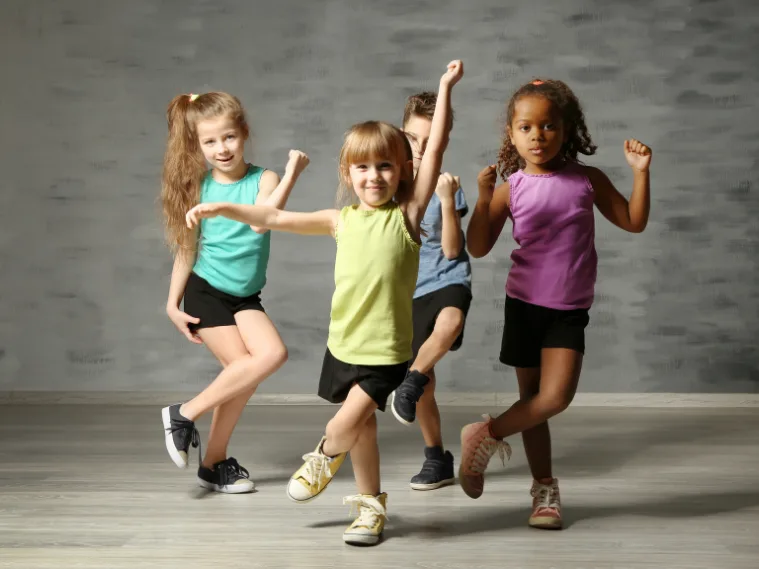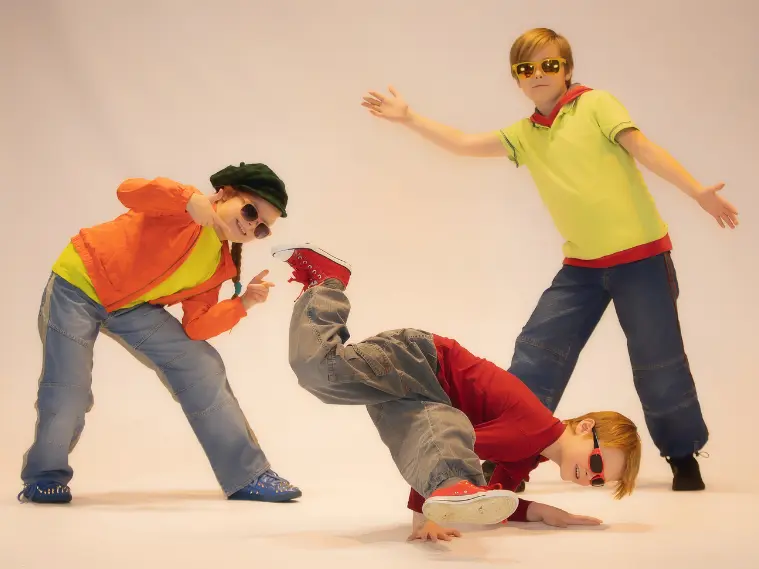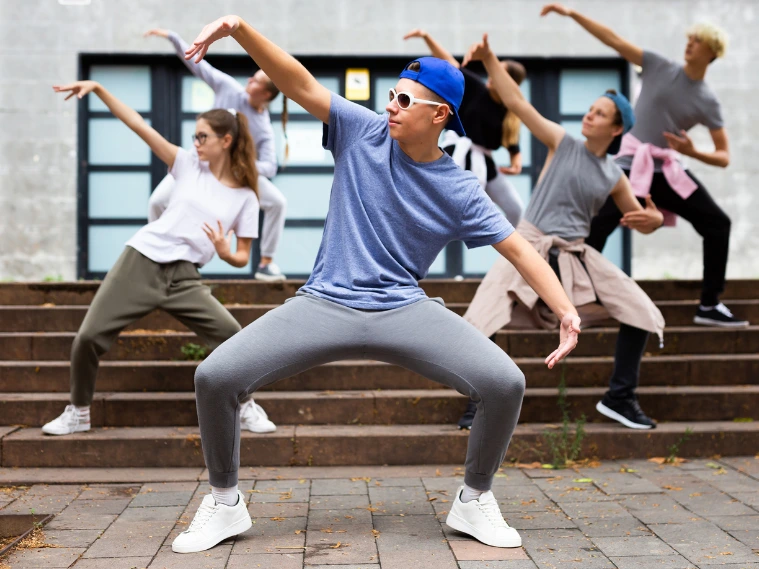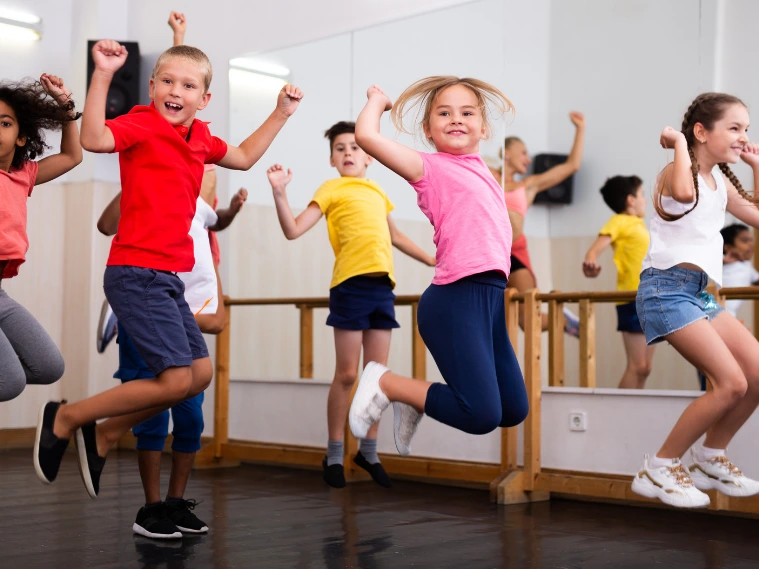

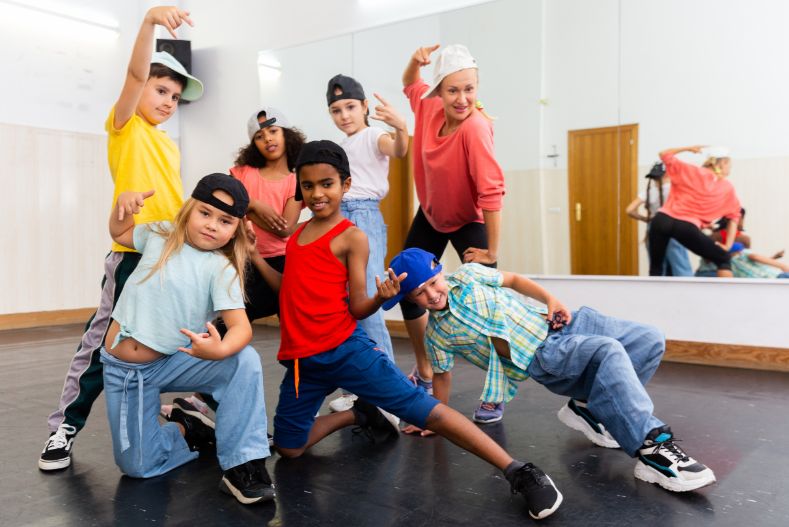

Hip hop dance is more than a collection of energetic dance moves. It is a powerful form of expression shaped by rhythm, individuality, music, and street culture. What began within communities in New York City has grown into an influential art form practiced in dance schools and studios around the world.
Learning the different styles and building your dance vocabulary can help you better understand the movements you encounter in class. Some styles focus on detailed footwork and athletic movement. Others focus on musicality, improvisation, body control, or set dance routines.
Whether you’re a beginner or an experienced dancer, exploring these styles can help you develop confidence, coordination, body awareness, and your own approach to movement.
Here are nine exciting styles of hip hop dance you may discover in class.
Where Did Hip Hop Dance Begin?
Before exploring the individual styles, it helps to understand where the movement came from.
Hip hop culture developed in New York City during the 1970s, particularly within African American and Latino communities in the Bronx. Music, dance, graffiti art, and DJing became important forms of expression within the emerging culture.
DJ Kool Herc is widely associated with hip hop’s early development. At parties in the Bronx, his approach to extending instrumental breaks gave dancers more time to showcase their movements. These dancers became known as breakers, B-boys, and B-girls.
As the culture spread throughout the United States, dance continued evolving alongside hip hop music. What began as a community-centered form of expression eventually influenced entertainment, fashion, the music industry, and broader urban culture.
Today, dancers can encounter both foundational street styles and newer studio-based approaches influenced by contemporary and modern dance.
1. Breaking (B-Boying/B-Girling)
Breaking is an athletic dance style closely connected to the origins of hip hop in the Bronx. It combines rhythm, creativity, strength, intricate footwork, and floor-based movement.
Some of the most recognizable dance moves and foundations in breaking include Toprock, Downrock, Freezes, and Power Moves.
Toprock refers to steps performed while standing and is often used to begin a sequence. Downrock brings the dancer closer to the floor, incorporating detailed footwork supported by the hands and feet.
Freezes involve stopping and holding the body in a controlled position, often requiring considerable strength and balance. Power moves include athletic rotational movements and spins that require coordination, practice, and control.
Breaking also has a strong freestyle tradition. Instead of simply memorizing choreography, dancers learn foundations that they can eventually combine and interpret in their own way.
Events such as the B-Boy Summit have also helped celebrate breaking and preserve connections between dance and hip hop culture.
2. Popping
Popping is a funk style recognized for sharp, rhythmic movements. Its fundamental technique involves quickly contracting and relaxing muscles to produce a sudden effect often called a “pop” or “hit.”
Timing and body control are especially important. Rather than moving at one constant intensity, dancers alternate between sharp hits and smoother transitions.
As students become more comfortable with the technique, they can experiment with isolations, different rhythms, and combinations of dance moves.
Popping can help dancers improve musicality, coordination, precision, and body awareness. It encourages students to listen carefully to the music and interpret individual beats through movement.
Although popping is frequently taught alongside hip hop styles today, learning about its funk roots gives dancers a better understanding of its history and technique.
3. Locking
Locking is another energetic funk style that emerged in the United States around the beginning of the 1970s. Don Campbell is credited with developing the dance and its distinctive locking technique.
The style features quick movements followed by recognizable pauses or “locks.” A dancer might move rapidly through a sequence, suddenly hold a position, and then return to the rhythm.
Personality is a major part of locking. Performers often use expressive gestures, exaggerated movements, and playful interaction with their audience.
For students, locking provides an enjoyable opportunity to work on musicality, timing, coordination, and performance skills.
As dancers become more comfortable with the foundations, they can add their own personality instead of simply repeating the same movements.
4. Krumping
Krumping is an expressive, high-energy street dance style that developed in Los Angeles. It has powerful movement and freestyle. It also shows musicality and emotional expression.
Krumping lets dancers show energy and emotion through movement. It does not focus on perfectly synchronized choreography.
Performances can include strong gestures, rapid changes in intensity, and spontaneous movement. Because improvisation plays such an important role, two dancers can interpret the same piece of music very differently.
Students exploring krumping can work on stamina, confidence, musicality, and control while learning how to channel energy through movement.
For dancers who enjoy expressive performance and freestyle, krumping can be an exciting addition to their training.
5. House Dance
House Dance developed alongside house music and is especially recognized for rhythmic footwork, fluid movement, improvisation, and freedom of expression.
The relationship between dancer and music is central to the style. Rather than relying entirely on predetermined choreography, performers frequently respond spontaneously to changes in rhythm and sound.
Footwork plays a major role in House Dance, requiring coordination, balance, and control. Smooth transitions connect individual movements and contribute to the flowing quality associated with the style.
As students become more experienced, House Dance challenges them to combine technique with individual expression.
Because it is improvisational, dancers can try new things with musicality. They can find new ways to interpret music through movement.
6. Waacking
Waacking emerged from Los Angeles club culture and is recognized for fast arm movements, expressive posing, musicality, and dramatic performance.
The upper body plays an especially important role. Dancers use their arms to create quick, fluid patterns while combining those movements with poses, footwork, and changes in direction.
Expression is equally important. Instead of simply completing a sequence of steps, performers use movement to communicate personality and confidence.
Students who learn Waacking can improve coordination, upper-body control, music sense, and performance skills.
The style can introduce students to movement qualities that are different from those in traditional studio disciplines or modern dance. This helps them become more versatile performers.
7. Freestyle and Improvisation
Freestyle is an essential component of hip hop dance because it allows dancers to move without following predetermined choreography.
Instead, dancers listen to the music and respond in the moment. Their movement may use techniques they already know. It also allows room for trying new things and personal interpretation.
Freestyle is commonly associated with battles and cyphers, but it can also be an important part of regular training at dance schools.
Beginners may find improvisation scary at first. With practice, however, it can develop confidence and encourage dancers to trust their instincts.
Freestyling also strengthens musicality because students learn to recognize rhythm, tempo, accents, and changes within the music.
There isn’t one perfect way to freestyle. Individuality is exactly what makes it such an important part of a dancer’s journey.
8. Modern Hip Hop Dance Choreography
Modern hip hop dance choreography brings different street influences into structured routines commonly taught at a dance studio.
Unlike freestyle, choreography focuses on learning a predetermined sequence of movements. Students practice timing, transitions, musicality, and synchronization. They do this while working through combinations created by an instructor.
Modern choreography can also incorporate movement qualities influenced by jazz, contemporary, and modern dance. This mix of techniques gives students chances to try different ways of moving. It also helps them become more versatile.
In group routines, dancers learn to coordinate with one another. This requires awareness of spacing, formations, timing, and performance quality.
For beginners, choreography provides a structured environment for developing foundational skills. More experienced dancers can focus on precision, performance, and increasingly complex combinations.
Learning choreography can prepare students for recitals, studio events, and performance crews. In these, teamwork and synchronization are very important.
9. Litefeet
Litefeet is an energetic street dance style that emerged in New York City, particularly in Harlem and the Bronx.
It is recognized for fast footwork, expressive upper-body movement, and tricks involving clothing or accessories, including hats and shoes.
Litefeet places a strong emphasis on individuality. Dancers combine recognizable foundations with personal movement choices, creating performances that feel spontaneous and distinctive.
Its playful energy makes the style particularly engaging for dancers who enjoy fast-paced movement and freestyle.
Students who learn Litefeet can improve coordination, rhythm, creativity, and confidence. They also learn about an important part of New York City’s changing dance culture.
What Dance Moves Do Beginners Learn?
The specific movements taught will depend on the instructor, class level, and style. Beginners usually start with foundational steps. They try more complicated combinations later.
A teacher may introduce basic grooves, footwork, isolations, rhythm exercises, and simple combinations. Students can then apply those foundations when learning popping, locking, breaking, freestyle, or choreography.
Building strong fundamentals is more valuable than rushing into advanced tricks. Good dance classes give students time to understand timing, coordination, posture, and musicality before progressing.
Beginners can also reinforce what they learn in class with appropriate practice at home. An online tutorial can sometimes help review terminology or a basic movement. However, it does not replace feedback from an experienced instructor who can watch technique in person.
Hip Hop Dance vs. Modern Dance: What’s the Difference?
Hip hop and modern dance developed from different histories and traditions.
Modern dance emerged partly as an alternative to the conventions of classical ballet and became associated with influential figures such as Martha Graham. It often emphasizes expressive movement, use of space, and different approaches to technique and choreography.
Hip hop developed from a different cultural environment, with strong connections to music, community gatherings, freestyle, battles, and street expression.
Today, however, the boundaries aren’t always rigid. Choreographers may draw inspiration from several disciplines, and dancers who train in multiple styles can develop a broader movement vocabulary.
Experiencing both studio and street-influenced styles can ultimately help students become more adaptable dancers.
Which Style Is Right for You?
There isn’t one style that’s best for every dancer.
If you enjoy athletic movement and floorwork, you might gravitate toward breaking. If precision and musical timing appeal to you, popping or locking could be exciting choices.
Dancers who enjoy personal expression may connect with freestyle, krumping, or Waacking, while students who enjoy structured routines may prefer choreography.
You don’t have to choose only one.
Exploring different styles at dance schools can help you become a more versatile performer. Each discipline helps people develop different skills. These skills include coordination, musicality, strength, creativity, confidence, and performance.
Start Your Dance Journey in Las Vegas
Learning different styles is about more than memorizing steps. Dance gives students opportunities to understand rhythm, improve coordination, build confidence, and discover how they personally connect with music.
Beginners don’t need previous experience to get started. Supportive dance classes allow students to learn foundational movements at an appropriate pace before progressing toward more challenging techniques.
At Learn The Arts!® in Las Vegas, students can explore movement and develop their skills in an encouraging environment designed for learning and growth.
Whether you’re stepping onto the dance floor for the first time or expanding your existing experience, there’s always something new to discover.
Ready to get started? Request Info today to learn more about hip hop dance classes at Learn The Arts!® in Las Vegas.