

Introduction
Learning piano as an adult is a rewarding experience that combines creativity, discipline, and personal growth. Many adults decide to learn piano to fulfill a lifelong dream or find a new creative outlet. Unlike childhood lessons, adult learning is often driven by personal goals and motivation. With the right mindset and guidance, adults can make steady and meaningful progress.
Starting piano later in life comes with unique advantages and challenges. Adults bring focus, patience, and clear intentions to their learning journey. Working with a skilled piano teacher and exploring classical music pieces can help ease concerns and build confidence. This guide will walk you through the process of starting piano as an adult.
What Makes Adult Piano Learning Different
Adult piano learners have different needs and expectations compared to children. Life experience, schedules, and learning styles all play a role. Many adults benefit from online lessons and practicing digital pianos, which provide flexibility and convenience. Recognizing these differences helps adults approach lessons with confidence. Choosing online lessons and using digital pianos can make learning more accessible and tailored to individual schedules, while ensuring piano lessons build skills for the future and enhance the overall experience.
Your Learning Pace and Personal Goals
Adults learn at a pace that suits their individual goals and comfort levels. Some focus on playing favorite songs, while others enjoy learning techniques and theory. Personal motivation helps guide progress. This flexibility allows learning to feel meaningful and enjoyable.
Balancing Practice with a Busy Schedule
Adults often juggle work, family, and other responsibilities. Finding time to practice can be challenging but manageable with planning. Short, focused practice sessions are highly effective. Consistency matters more than long practice hours.
Overcoming Common Adult Learning Myths
Many adults believe they are too old to learn piano. Others worry they lack natural talent or musical ability. These myths can discourage progress unnecessarily. With proper instruction, adults can learn successfully at any age.

What to Expect in Your First Few Months
The first few months of piano lessons are about building comfort and familiarity. Beginners focus on foundational skills rather than perfection. Progress happens gradually and consistently. Below is what most adults can expect early on.
Getting Familiar with the Keyboard and Hand Positions
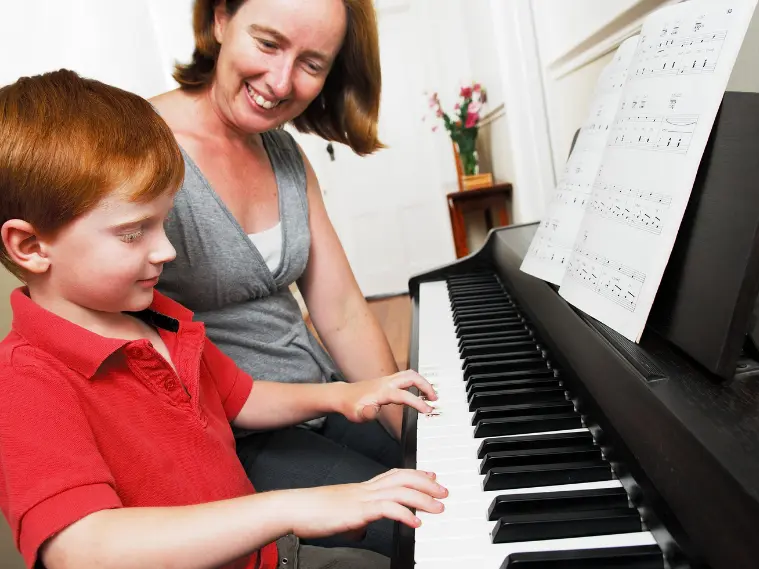
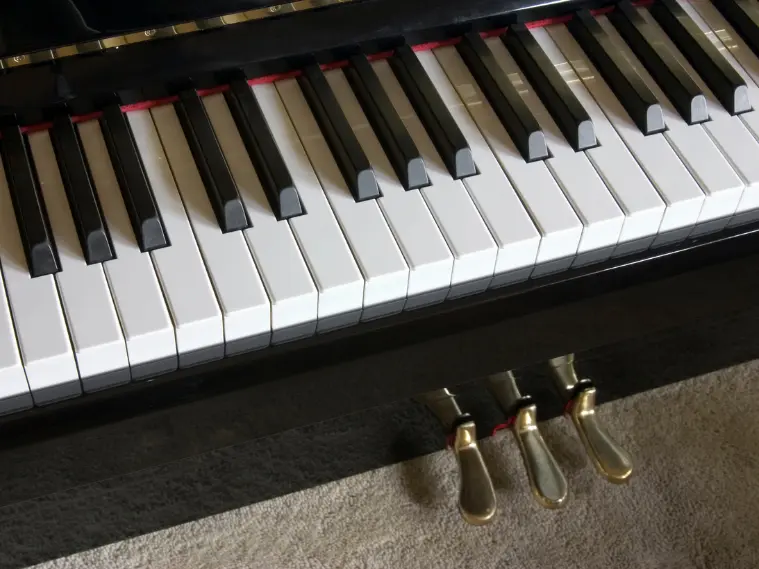
Early lessons introduce the layout of the keyboard, proper hand position, and basic finger numbers. Understanding music theory, sight reading, and music notation alongside correct hand position helps with coordination and accuracy. These fundamentals create a strong base for future skills, and comfort with the keyboard builds confidence quickly.
Learning Basic Songs and Simple Techniques
Adult beginners often start with simple melodies, exercises, and easy piano basic songs. Using clear sheet music and an effective learning method reinforces hand coordination and rhythm while introducing basic music theory concepts. Learning recognizable tunes makes practice enjoyable and helps students stay engaged. By following a consistent learning method and referring to sheet music, small achievements build confidence and maintain motivation.
Building Confidence Through Small Wins
Each new skill builds confidence over time. Mastering a short piece or exercise—especially when playing in small ensembles and understanding the underlying music theory—feels especially rewarding. These small wins encourage continued effort, and confidence grows naturally with consistent practice.
Skills Adult Beginners Develop Over Time
As lessons continue, adults begin developing essential piano skills. These skills improve both musical ability and coordination. Progress may feel gradual, but it is steady. Below are key skills for adult beginners developing.
Improving Finger Strength and Independence
Regular practice strengthens fingers and improves control. Finger independence allows smoother and more accurate playing. Exercises help build coordination between hands. This skill improves overall technique.
Understanding Rhythm, Timing, and Music Reading
Adults gradually learn to read musical notation and understand rhythm. Timing exercises help maintain steady playing and reinforce a solid musical foundation. Working with an experienced music teacher and practicing regularly helps improve music reading skills. A knowledgeable music teacher guides students through exercises and repetition, supporting long-term musical growth and confidence.
Becoming Comfortable with Both Hands Playing Together
Playing with both hands is a major milestone for beginners. Coordination develops through simple patterns and repetition, and over time, hand independence improves. This leads to more confident and fluid playing, especially when students begin exploring performance opportunities.
How to Start Your Piano Journey the Right Way
Starting correctly helps adults avoid frustration and burnout. A thoughtful approach sets the stage for success and a rewarding musical journey. From choosing an instrument to setting goals, preparation matters. Below are helpful ways to begin your piano journey.
Choosing the Right Instrument for Home Practice
Adults can start with an acoustic piano or a digital keyboard. Weighted keys help develop proper techniques. Choosing an instrument that fits your space and budget is important. Comfort encourages regular practice.
Setting Realistic Goals and Practice Habits
Clear goals keep learning focused and enjoyable. Realistic expectations prevent discouragement. Short daily practice sessions are effective. Consistent habits lead to steady progress.
Exploring Beginner-Friendly Songs and Styles
Adults benefit from playing the music they enjoy. Beginner-friendly songs help develop music literacy and rhythmic reading while keeping motivation high. Exploring different styles adds variety, and enjoyment helps sustain long-term learning.
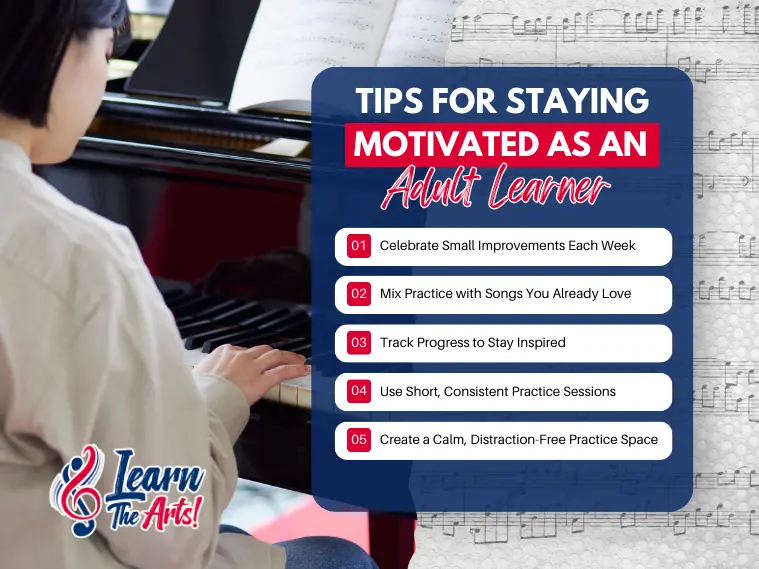
Tips for Staying Motivated as an Adult Learner
Staying motivated is key to long-term success. Adult learners benefit from encouragement and variety. Small changes can make practice more enjoyable. Below are tips to help adults stay motivated.
Celebrate Small Improvements Each Week
Acknowledging progress boosts confidence and encourages musical expression. Small improvements add up over time, and celebrating milestones keeps motivation strong. Every step forward matters.
Mix Practice with Songs You Already Love
Playing familiar songs makes practicing enjoyable, especially in group piano classes where shared music builds motivation. Music you love keeps you engaged, and group classes create a supportive environment that encourages participation. This balance prevents boredom, and enjoyment supports consistency.
Track Progress to Stay Inspired
Tracking progress helps visualize improvement and builds performance confidence. Keeping notes or recordings shows growth, and seeing progress reinforces commitment. It provides encouragement during challenging moments.
Use Short, Consistent Practice Sessions
Short practice sessions are easier to maintain and stay aligned with musical goals. Consistency builds stronger habits, and even 15 minutes can be effective. Regular practice leads to steady improvement toward your musical goals.
Create a Calm, Distraction-Free Practice Space
A quiet space helps focus, especially when preparing for or continuing private lessons. Reducing distractions improves practice quality, and a comfortable environment encourages consistency. This supports better learning outcomes in private lessons.
Advantages of Learning Piano as an Adult
Adult learners bring unique strengths to piano lessons. Life experience and discipline support learning. Piano also offers emotional and mental benefits. Below are advantages adults experience when learning piano.
Stronger Discipline and Focus Compared to Kids
Adults often approach lessons with clear intent. Focus helps maximize practice time. Discipline supports consistent effort. These traits aid in long-term progress.
Ability to Choose Music You Personally Enjoy
Adults can choose music that resonates with personal care. This freedom increases enjoyment. Playing meaningful songs can help you build motivation. Personal connection enhances learning.
Reduced Stress and Improved Mental Wellness
Playing piano can be calm and therapeutic. Music helps reduce stress and tension. Regular practice supports mental wellness. The piano becomes a relaxing outlet.
A Rewarding Creative Outlet for Self-Expression
The piano allows emotional expression through music. Creativity grows with experience. Playing becomes personally fulfilling. This makes learning deeply rewarding.
How Learn the Arts, Las Vegas Supports Adult Beginners
Supportive instruction makes adult learning enjoyable. Learn the Arts understands adult learning needs. Lessons are designed to encourage confidence and growth. Below are ways Learn the Arts supports adult beginners.
Patient Instructors Who Understand Adult Learning Needs
Instructors tailor lessons to adult learners. Patience and encouragement guide progress, providing clear explanations that reduce frustration. These are compelling reasons to enroll in piano classes, helping build confidence and enjoy the learning journey.
Flexible Lesson Times for Busy Schedules
Flexible scheduling supports busy adults. Lessons fit around work and family commitments. This convenience supports consistency. Regular attendance improves progress.
A Welcoming Environment for Total Beginners
Adults feel comfortable learning in a welcoming space. Beginners are supported without pressure. Encouragement builds confidence. This environment promotes enjoyment and growth.
Wrapping Up
Learning piano as an adult is both achievable and rewarding. With realistic goals and supportive instruction, progress happens naturally. Piano offers creativity, relaxation, and personal fulfillment. The journey is just as meaningful as the destination. Enroll piano classes today to begin your musical adventure.
At Learn the Arts, adult beginners receive guidance tailored to their needs. Supportive instructors and flexible lessons make learning more enjoyable. Whether you are starting fresh or returning to music, the opportunity is always there. Start your journey with us and discover the joy of learning piano as an adult.
FAQs
1. Is it ever too late to start learning piano?
It is never too late to start learning piano. Adults of all ages can successfully learn with proper guidance. Motivation and consistency matter more than age. Many adults find learning especially rewarding later in life.
2. How much should adults practice piano per week?
Most adults benefit from practicing three to five times per week. Short, focused sessions are effective. Even 15 to 30 minutes can produce results. Consistency is more important than duration.
3. Do adults learn piano slower than kids?
Adults may learn differently, but not necessarily slower. Strong focus and motivation help adults progress efficiently. Life experience supports understanding and discipline. Progress depends on practice habits rather than age.
4. What type of piano is best for beginners?
A digital piano with weighted keys is a great choice for beginners. It provides proper touch and sound without requiring much space. Acoustic pianos are also suitable if available. Comfort and accessibility are key.
5. Can adult beginners learn piano without any musical background?
Yes, many adult beginners start without musical experience. Lessons begin with basic concepts and build gradually. Supportive instruction makes learning approachable. With practice, adults can progress confidently.